Affiliate disclosure: Some links below are affiliate links. If you buy through one, Dog Product Reviews earns a commission at no extra cost to you. As an Amazon Associate I earn from qualifying purchases. Full disclosure.
Evidence: research-led. This is a research-led buying guide, not a hands-on fit, pull-force or durability test. We checked current manufacturer specifications, size charts and care instructions, then applied current RSPCA guidance that a walking harness should be comfortable and correctly fitted. We do not transfer a fit result from one dog or size to another. How we assess products.
Everyday buyers wanting two attachment points and a clear girth chart.
Evidence: research-led
Main drawback: The previously linked Medium/Red Amazon ASIN was unavailable on 20 July 2026. The retailer button now opens a product-name search so you must choose the correct current size and colour; the manufacturer link provides the authoritative chart.
Skip if: Owners who already know they need a no-pull harness — go straight to our no-pull harness page.
A harness should make daily walks easier, more comfortable and a bit less chaotic. The right choice depends on your dog's size, shape, walking habits and whether the problem is simple comfort, stronger control or a poor fit on a smaller frame.
This page is the main guide for owners who want to understand the options before choosing something more specific. From here, you can move into dedicated pages for no-pull harnesses or better-fitting harnesses for small dogs if that is where the real buying decision sits.
Quick answer:
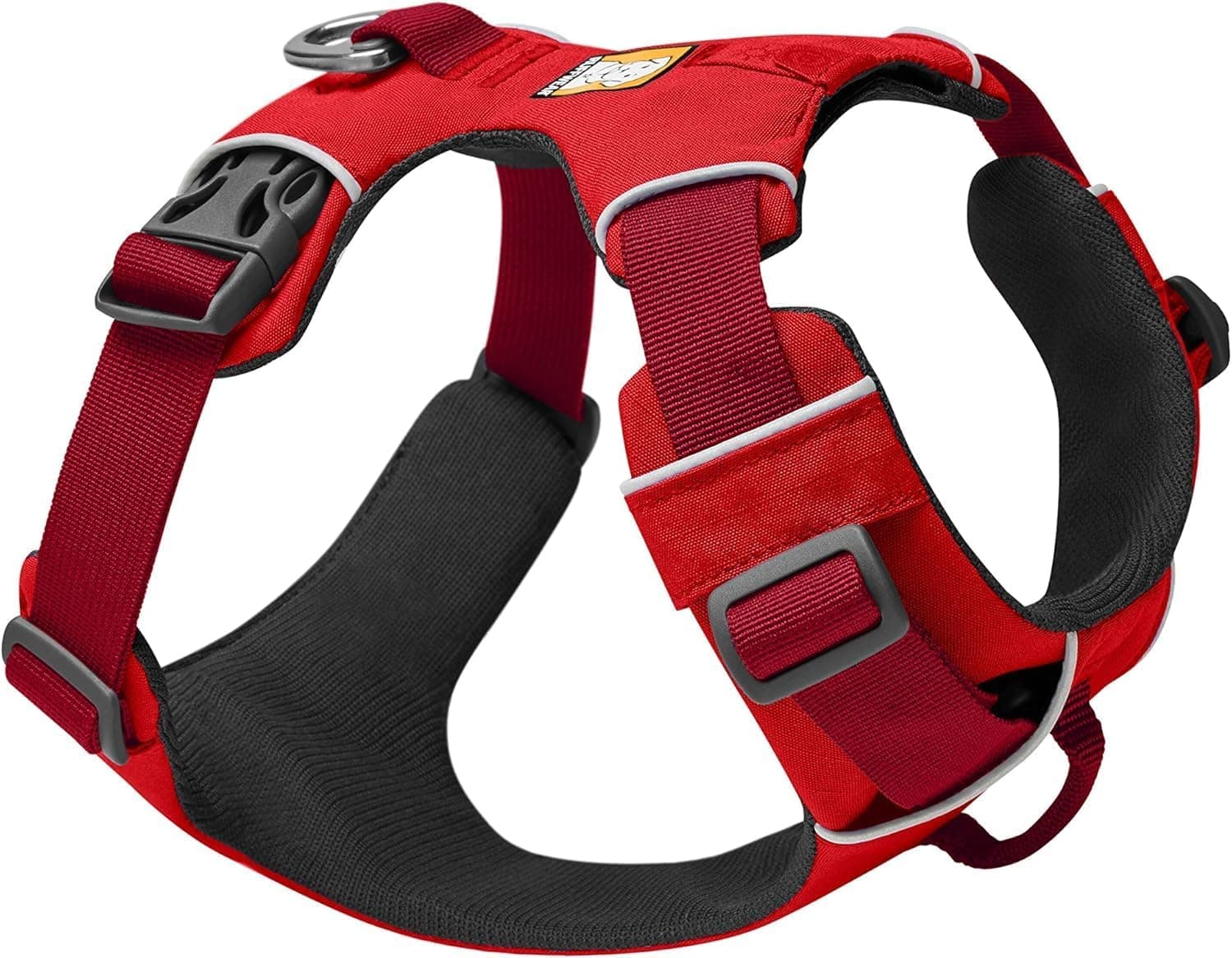
Best-specified everyday option: Ruffwear Front Range — four adjustment points, a back aluminium V-ring and a reinforced chest attachment. Ruffwear sizes it by widest rib-cage girth from 33–107 cm; measure before selecting a retailer variant.
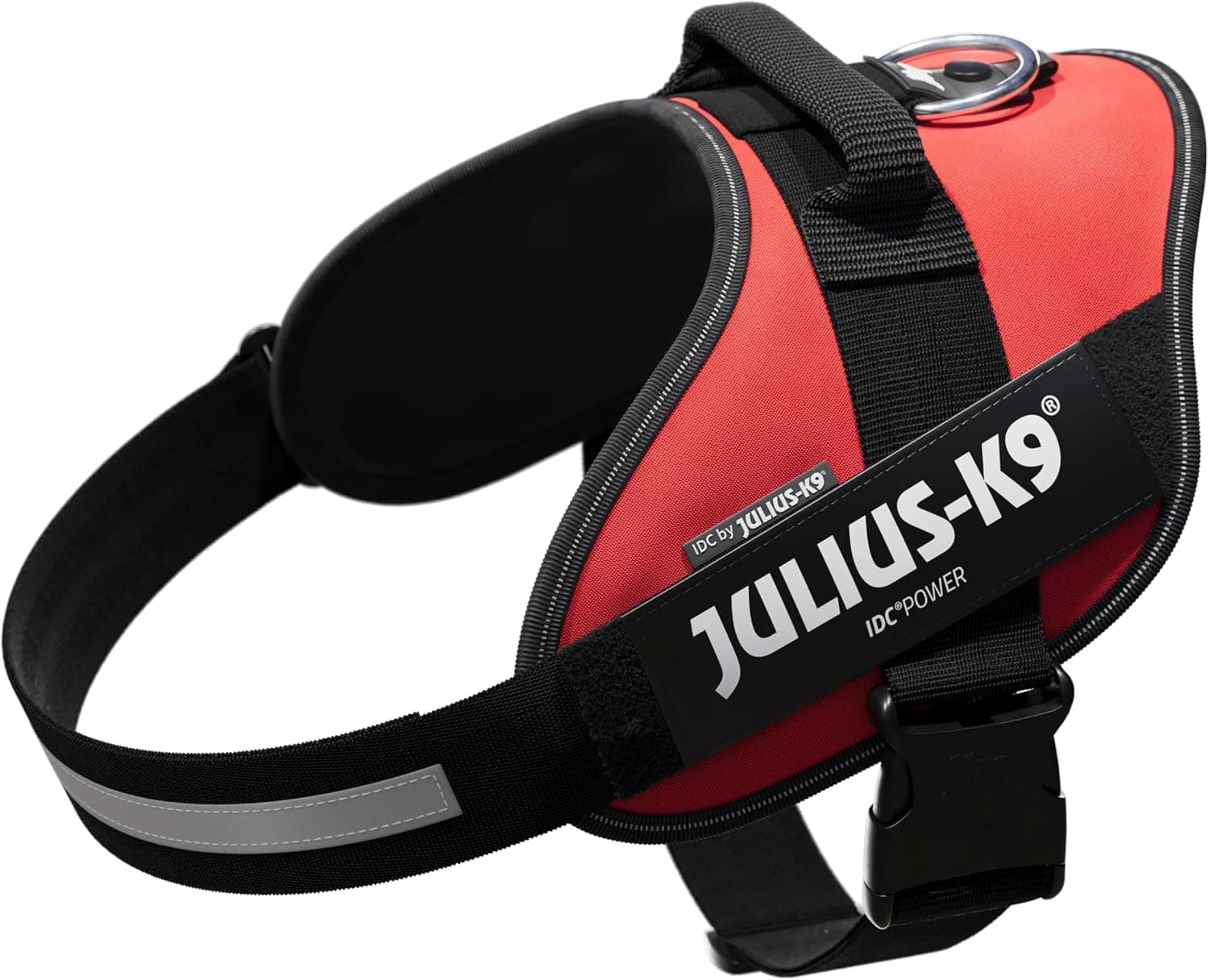
Handle-led back-clip option: Julius-K9 IDC Powerharness — a top handle, back attachment and published girth/weight chart from Baby1 to size 4. It is not a front-clip no-pull design.
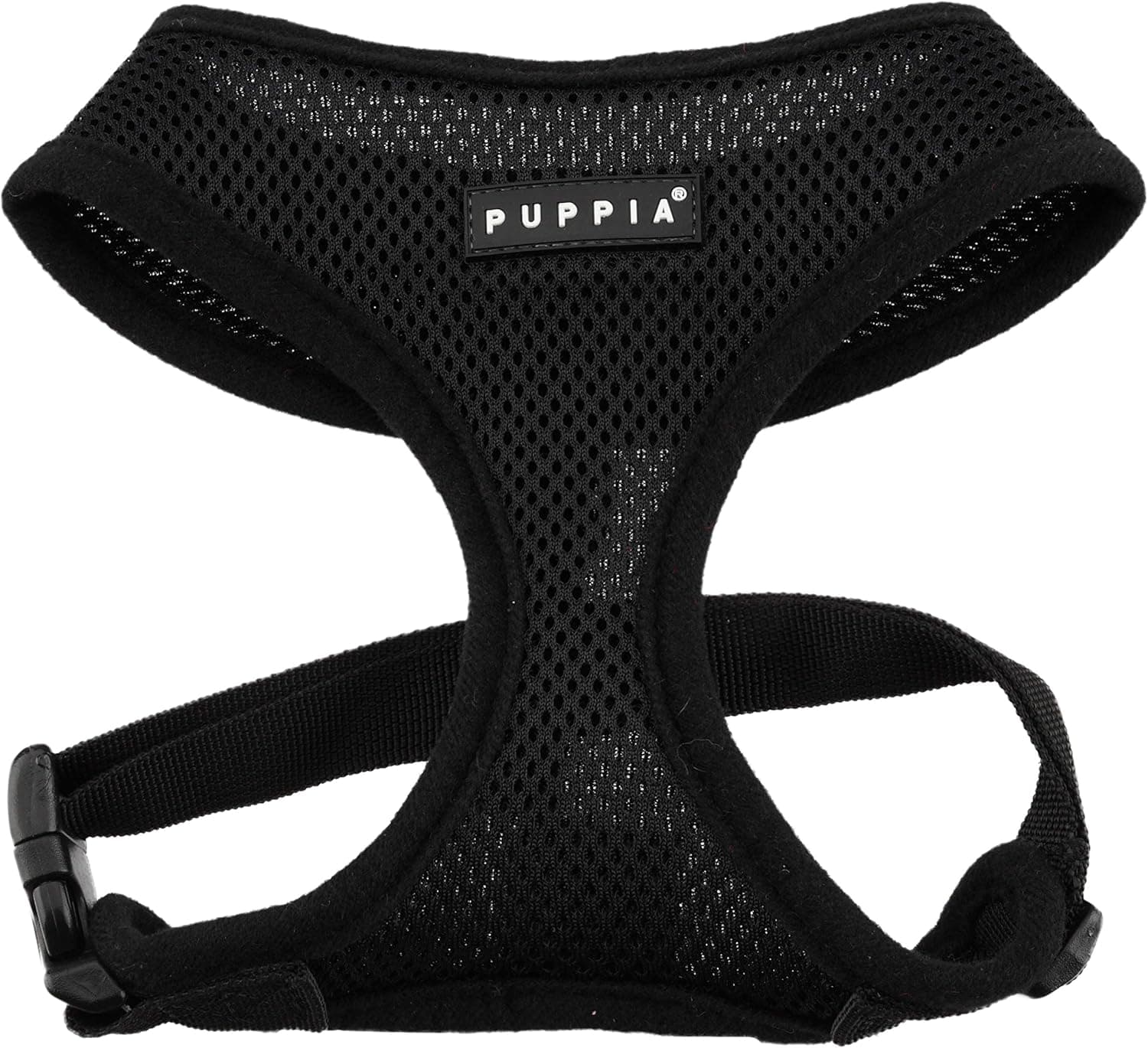
Lower-bulk small-dog option: Puppia Soft Harness — the linked retailer search exposes current colours and sizes, but it is not presented as escape-proof or suitable for a strong puller.
No harness shape is universally best. Fit it to the individual dog, check for rubbing and follow the exact manufacturer instructions; published features are not proof of comfort or longevity.
What actually matters here
Exact published girth band and adjustment points; size labels are not consistent between brands.
Attachment position: back, chest or both, and whether the page is making a supported specification claim rather than promising a training result.
Current material, care and drying instructions, without inferring durability from appearance or price.
Individual fit checks for rubbing, rotation and escape risk after adjustment.
Who this is for
Owners choosing a harness for the first time and wanting to understand fit, comfort and control options.
Dog owners replacing a harness that rubs, slips or does not suit their dog's walking style.
Anyone unsure whether they need a general harness, a no-pull design or something sized for a small dog.
Who should skip
Owners who already know they need a no-pull harness — go straight to our no-pull harness page.
Small dog owners looking for a lightweight option — see our small dog harness guide instead.
What is the best dog harness in the UK?
Our research-led everyday pick is the Ruffwear Front Range Harness because its current specification is unusually clear: four adjustment points, foam-padded construction, a back aluminium V-ring, a reinforced chest attachment and a 33–107 cm girth range across five sizes.
Those specifications do not prove that it will be comfortable on every dog. Ruffwear says to measure the widest part of the rib cage and choose the larger size between bands; check the live Front Range size chart before ordering.
What is the best no-pull dog harness?
A chest attachment can help redirect a dog, but it does not prove a product will stop pulling. The Front Range has a reinforced chest loop; the Perfect Fit modular harness has an optional steering point and separately sized pieces.
Use a harness as management alongside reward-based loose-lead training. The RSPCA recommends a well-fitting comfortable harness as an ethical control option and does not claim that one commercial model cures pulling.
What harness is best for small dogs?
Small dogs still need measurement-led selection. Our lower-bulk option is the Puppia Soft Harness, but the retailer destination covers multiple sizes and colours and the page does not claim that its vest format is suitable for escape-prone or strong-pulling dogs.
For the Ruffwear Front Range, XXS is 33–43 cm and XS is 43–56 cm at the widest rib cage. Julius-K9 publishes separate chest and weight bands starting at Baby1; use the current IDC chart instead of translating a breed name into a size.
Quick questions before you buy
What is the best dog harness in the UK?
There is no universal winner. Our research-led everyday pick is Ruffwear Front Range where its measured girth band and two attachment points fit the job; Julius-K9 IDC is the handle-led back-clip option, and Puppia is a lower-bulk small-dog option.
Does a Y-front harness guarantee unrestricted movement?
No. Current biomechanical evidence is limited and has found that several harness types can alter forelimb movement. Treat shape as one input, then judge individual fit, rubbing and gait rather than repeating a universal marketing claim.
Everyday buyers wanting two attachment points and a clear girth chart
The previously linked Medium/Red Amazon ASIN was unavailable on 20 July 2026. The retailer button now opens a product-name search so you must choose the correct current size and colour; the manufacturer link provides the authoritative chart.
Owners specifically wanting a top handle and back attachment
It has no standard chest attachment for steering. The old affiliate ASIN opened XL/Red, so the new retailer search requires you to choose the measured size rather than accepting a hidden variant.
Small dogs whose measured fit suits a lower-bulk vest format
The old direct ASIN opened Medium/Black. The retailer search now exposes current variants, but the buyer must verify measurements and should not treat this vest as escape-proof or a strong-puller solution.
~£19
£
Recommended picks
Top pick
Best for: Everyday buyers wanting two attachment points and a clear girth chart
Why it made the list: Ruffwear publishes four adjustment points, foam-padded construction, an aluminium back V-ring, a reinforced chest attachment and sizes from 33–107 cm girth. The chest point provides a steering option; it is not evidence of a guaranteed no-pull result.
Main drawback: The previously linked Medium/Red Amazon ASIN was unavailable on 20 July 2026. The retailer button now opens a product-name search so you must choose the correct current size and colour; the manufacturer link provides the authoritative chart.
Typical price band: ££
Pros
Five published girth bands from 33–107 cm.
Back and chest attachment points.
Published materials and hand-wash/air-dry care instructions.
Cons
No hands-on comfort or wear test by Dog Product Reviews.
Search destination requires the buyer to verify size, colour and seller.
Why it made the list: Julius-K9 publishes a top handle, back attachment and a size chart covering 29–138 cm chest circumference with weight bands. Correct sizing and adjustment are essential; the manufacturer warns that errors can allow escape.
Main drawback: It has no standard chest attachment for steering. The old affiliate ASIN opened XL/Red, so the new retailer search requires you to choose the measured size rather than accepting a hidden variant.
Typical price band: ££
Pros
Published chest and weight bands across nine sizes.
Top handle and interchangeable side patches.
Manufacturer fitting and care instructions are available.
Cons
Back attachment only in the standard setup.
No independent fit, escape or durability test on this page.
Why it made the list: The Soft Harness is a lower-bulk vest option sold in multiple sizes and colours. It is included for calm everyday walking where the exact neck/chest measurements match the current listing, not because we have tested it on every small breed.
Main drawback: The old direct ASIN opened Medium/Black. The retailer search now exposes current variants, but the buyer must verify measurements and should not treat this vest as escape-proof or a strong-puller solution.
Typical price band: £
Pros
Lower-bulk vest format.
Multiple sizes and colours are commonly listed.
Simple back attachment.
Cons
No hands-on comfort or escape test by Dog Product Reviews.
Breed-specific fit questions without choosing from weight alone.
FAQ
What is the best dog harness in the UK?
There is no universal winner. Our research-led everyday pick is Ruffwear Front Range where its measured girth band and two attachment points fit the job; Julius-K9 IDC is the handle-led back-clip option, and Puppia is a lower-bulk small-dog option.
Does a Y-front harness guarantee unrestricted movement?
No. Current biomechanical evidence is limited and has found that several harness types can alter forelimb movement. Treat shape as one input, then judge individual fit, rubbing and gait rather than repeating a universal marketing claim.
What harness do vets or trainers recommend?
We found no defensible evidence that UK vets or trainers collectively endorse one of these named products. The RSPCA supports a well-fitting comfortable harness as an ethical control option; individual veterinary or qualified training advice should account for the dog.
Is Julius-K9 a no-pull harness?
The standard IDC Powerharness is a back-attachment harness. Do not infer a front-steering function from retailer “no pull” wording; use its current fitting chart and choose a separate training plan if pulling is the problem.
What to buy alongside
Optional extras that may help with the task on this page. Check size, compatibility and care instructions before buying; these are category searches, not products tested by Dog Product Reviews.
Treat pouch for training
Front-clip no-pull training needs constant reinforcement — a hip-belt treat pouch keeps treats accessible without breaking pace.