Affiliate disclosure: Some links below are affiliate links. If you buy through one, Dog Product Reviews earns a commission at no extra cost to you. As an Amazon Associate I earn from qualifying purchases. Full disclosure.
Main drawback: It goes over the head, and both the neck and chest must fit the current chart. The maker’s XS starts at 20 cm neck and 32 cm chest; a smaller individual needs a different route, not a loose or improvised fit.
Skip if: Either the measured neck or chest falls outside the selected HALTI band, or the over-head entry causes avoidance.
There is no universal Yorkie harness size. The Royal Kennel Club gives up to 3.2 kg as the ideal breed-standard weight, but explicitly warns that an individual dog can be larger or smaller. Weight and breed cannot tell you whether a particular neck opening, chest band or strap position will fit.
This guide owns one decision: matching an everyday walking harness to the individual Yorkshire Terrier and the exact current product chart. It does not promise to stop pulling, prevent escape, protect the trachea or treat coughing.
The shortlist keeps three genuinely different routes: HALTI Anatomy is the most traceable exact-ASIN Amazon option; the current Ruffwear Hi & Light publishes the smallest girth band of the three; and PerfectFit is a modular, neck-buckle direct option that earns DPR no commission.
Quick answer:
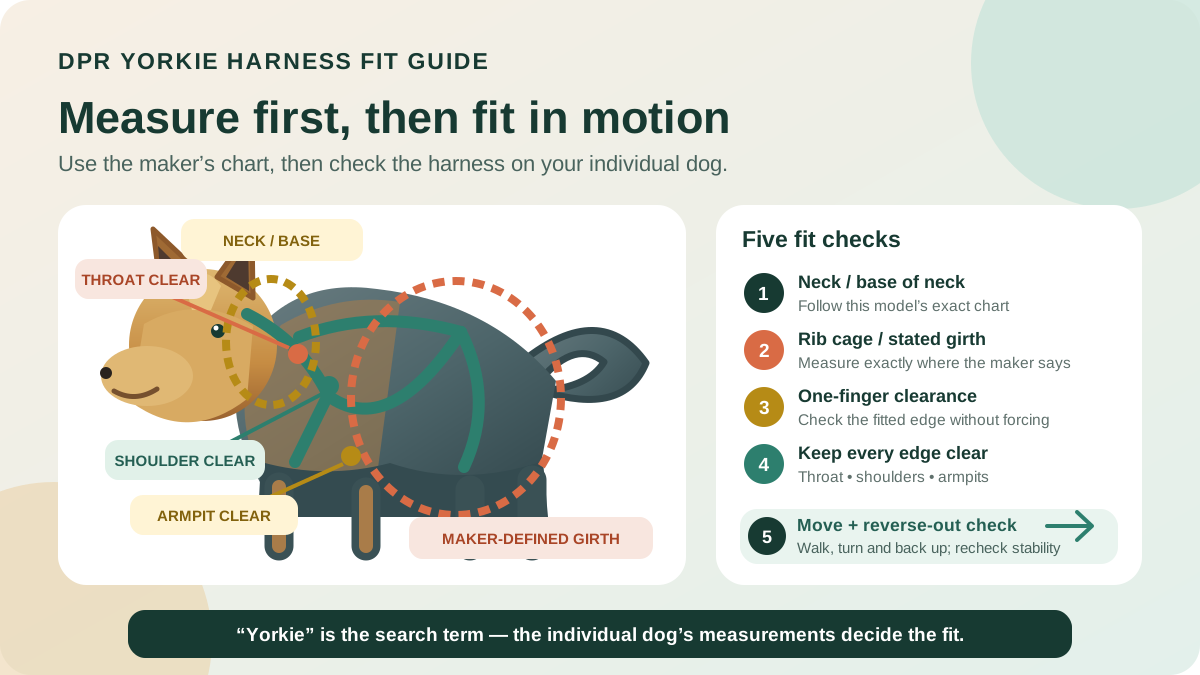
Measure for the exact model. HALTI asks for the base of the neck and widest rib cage; Ruffwear uses the widest rib cage; PerfectFit asks for a snug girth immediately behind the front legs. Do not transfer XS, XXS or any other label between brands.
Best-documented exact-ASIN route: HALTI Anatomy. The maker links the Amazon product family and publishes separate neck and chest bands, five adjustments, three lead points and a handle. Both measurements must fit the chosen band.
Smallest published girth route: current Ruffwear Hi & Light. Its XXXS band starts at 23 cm, but that does not make XXXS “the Yorkie size”. Confirm current style 30821 and two attachment points because Amazon results can mix the older generation.
Modular direct alternative: PerfectFit Yorkshire Terrier. Its neck buckle, three replaceable pieces and maker sizing support may help when entry or proportions complicate a one-piece fit. The direct link is non-affiliate.
Coughing is a veterinary boundary. A harness can reduce pressure on the windpipe compared with a collar, but it cannot diagnose, prevent or treat tracheal collapse. New, repeated or worsening cough or any breathing difficulty needs veterinary advice.
Yorkie harness comparison: three current buying routes
These are current maker-published specifications, not Yorkie fit or performance findings from Dog Product Reviews. Reopen the official chart immediately before ordering.
Three replaceable modular pieces; five adjustment points; neck buckle; top and front D-rings.
Measure snugly immediately behind the front legs and use the Harness Finder or sizing team. The rendered 15 mm XXS/XXS/Small preset states 40–50 cm.
Direct non-affiliate route. The displayed preset is not universal and may be too large; the front D-ring must never be used alone.
What actually matters here
Open the exact maker page before measuring because each brand defines its girth point and bands differently.
Reject any breed, age or weight recommendation that skips the current model chart and both required measurements.
Check one-finger clearance, a throat-clear front, free shoulder movement, armpit space, stable position in motion and resistance to slipping.
Choose over-head or neck-buckle entry according to the individual dog’s handling response rather than assuming one format suits the breed.
Use only the lead attachment setup documented for the exact model; a chest point is management hardware, not proof of a no-pull result.
Confirm the exact current model, measured size, seller, stock and unused-return terms before paying or removing tags.
Who this is for
Yorkie owners comparing a clearly traceable exact-ASIN route, a very-small-girth route and a modular neck-buckle route.
Puppies and adults whose neck and chest fall into different-looking retail labels or whose current harness rotates, rubs or allows a paw through.
Owners prepared to measure the individual dog and observe the fitted harness while standing, walking, turning and backing up.
Who should skip
Either required measurement falls outside the current band, or a trial fit rides up, rotates, rubs, restricts movement or allows slipping.
Repeated backing out is the main risk; use the secure-fit guide and an individual backup plan rather than assuming an everyday harness is escape-proof.
The dog has a new, repeated or worsening cough, noisy or difficult breathing, blue or grey gums, collapse or distress; seek veterinary advice rather than changing equipment online.
Why “Yorkie” is not a harness size
The Royal Kennel Club Yorkshire Terrier standard describes an ideal compact dog with moderate spring of rib, a long silky coat and weight up to 3.2 kg. Those details explain why hardware scale, strap clearance and coat contact deserve attention, but they are not a retail size chart.
The same standard expressly warns that an individual dog can be larger or smaller than the listed ideal. A puppy, adult, full coat, short trim and body-condition change can all alter the measurement or how a strap sits.
This page therefore stays distinct from the broader small-dog harness guide: it answers Yorkie-specific fit questions without turning a breed label into XXS or XS.
Measure the point defined by the maker
HALTI requires two figures: the base of the neck and widest rib cage. Its current XS band is 20–32 cm neck and 32–44 cm chest. Both must fit; a match on only one measurement is not a pass.
Ruffwear uses the widest rib cage. Its current Hi & Light bands include XXXS 23–33 cm, XXS 33–43 cm and XS 43–56 cm, and the maker says to choose the larger size when between bands.
PerfectFit asks for a snug girth immediately behind the front legs and routes buyers through its Harness Finder or sizing team. Its rendered Yorkie preset is one starting configuration, not proof that a 40–50 cm band fits the dog in front of you.
Record the units and the exact model beside each number. Our harness measurement guide shows why copying “XS” from one chart to another produces avoidable mistakes.
HALTI Anatomy is the most traceable earning route
Company of Animals documents five adjustments across the neck, chest and sternum, front plus two back lead points, an integrated handle and hand-wash/air-dry care. The maker links the Amazon product family used by DPR, which makes the destination more defensible than an unverified category search.
Those are maker specifications, not proof that the harness is comfortable, stops pulling, prevents escape or carries an airway-safety guarantee. DPR has not fitted it on a Yorkie or tested the handle, pressure distribution, gait, coughing, washing or wear.
Choose it only when both measurements fit the current chart and the individual accepts over-head entry. Reopen the maker chart and Amazon variant immediately before ordering.
Ruffwear and PerfectFit solve different fit problems
The current Ruffwear Hi & Light is the shortlist’s smallest published girth route. It has four adjustments, an aluminium back V-ring and reinforced chest webbing loop, but no handle. Amazon results can mix in the older back-attachment-only generation, so confirm current style 30821 and two attachment points.
PerfectFit’s Yorkie route clips around the neck instead of passing over the head and uses three replaceable pieces. That may be useful when entry handling or neck/chest proportions complicate a one-piece harness, but its displayed preset may still be too large.
PerfectFit says its front D-ring must never be used alone: pair it with the back ring and a double-ended lead. It also says the harness is not crash-tested and is not recommended for use as vehicle restraint.
Run a standing and moving fit check
Dogs Trust advises checking that a harness avoids crossing the front of the shoulders, allows one-finger clearance, stays stable in movement and cannot be slipped. Those checks matter more than whether the packaging shows a Yorkie.
With tags still attached, check the throat, shoulder points, sternum, elbows and armpits while the dog stands. Then walk, turn, sit and back up indoors under supervision. Reject a fit that rides towards the throat, rotates, changes the gait, reaches the armpit or lets a paw enter the neck opening.
Do not add deliberate looseness as puppy “growing room”. The harness must fit today; remeasure before replacement and after a visible growth, trim, coat or body-condition change.
Long coat and tiny hardware need direct observation
Part a longer coat beneath each strap and buckle rather than tightening over trapped hair. After the first short walks, check for redness, broken hair, tangles, dampness, pinching or a strap that has moved closer to the elbow.
Hardware that looks small online can still feel bulky on an individual dog. Check whether buckles sit on a bony point, the lead clip pulls the harness sideways, or a handle or ring contacts the spine. These are hands-on observations; breed weight does not settle them.
Remeasure and repeat the moving check after grooming, a major trim or body change. Follow the exact care instructions—HALTI specifies hand wash, while Ruffwear specifies a cold gentle wash—then inspect webbing, stitching, buckles and attachment points before reuse.
Coughing sets a vet boundary, not a product claim
PDSA lists tracheal collapse as a breed-related health risk; that does not mean every Yorkie has it. Blue Cross explains that collar pressure can cause coughing and that a harness can reduce pressure on the windpipe.
Reducing pressure is not an airway-safety guarantee, and no everyday harness can diagnose, prevent or treat collapse. A cough can have several causes. A new, repeated or worsening cough, noisy or difficult breathing, blue or grey gums, collapse or distress needs veterinary advice; do not try to solve it with an online product switch.
A collar and identity tag remain a separate UK public-place requirement. Where neck or breathing concerns exist, ask the vet for individual walking-equipment advice and use the collar-versus-harness guide to keep identification and lead attachment as separate decisions.
Front attachments, escape and car travel are separate jobs
A chest point is management hardware, not proof of a no-pull result. Follow the exact maker arrangement and pair suitable equipment with reward-based loose-lead training.
None of the three everyday routes is presented here as escape-proof. If the dog has backed out or put a paw through a neck opening, use the secure-fit harness guide, controlled indoor trials and an individual backup plan.
A handle or D-ring is not proof of crash protection. PerfectFit explicitly says its harness has not been crash-tested; compare purpose-specific evidence on the dog car harness guide rather than using an everyday walking harness as vehicle restraint.
Questions Yorkie owners are asking now
Recent owner discussions repeatedly ask what to do when even XXS is loose, neck and chest fall into different bands, a paw passes through the neck opening, the dog backs out, hardware feels heavy, entry causes freezing, or a strap rubs the underarm or tangles a long coat.
There is no reliable breed-wide size. HALTI requires neck and widest-rib-cage measurements, Ruffwear uses the widest rib cage, and PerfectFit measures snugly immediately behind the front legs. Use the exact current chart and check the fitted harness in motion rather than ordering XXS or XS from breed, weight or age.
Is HALTI Anatomy the best harness for every Yorkie?
No. It is our best-documented exact-ASIN route because Company of Animals publishes separate neck/chest sizing, adjustment, attachment and care information and links that Amazon product family. DPR has not fitted it on a Yorkie; both measurements, over-head entry response and the moving fit decide suitability.
It goes over the head, and both the neck and chest must fit the current chart. The maker’s XS starts at 20 cm neck and 32 cm chest; a smaller individual needs a different route, not a loose or improvised fit.
A current lightweight route with a 23 cm published girth floor
The Amazon search can mix colours, sellers and the older style 3082, which has only a back attachment. Confirm current style 30821, two attachment points, the exact measured band and unused-return terms.
A modular fit, neck-buckle entry and direct maker sizing support
The rendered 15 mm XXS/XXS/Small preset states 40–50 cm and may be too large; use the Harness Finder or sizing team. PerfectFit says the front D-ring must be paired with the back ring and never used alone.
££
Recommended picks
Best-documented exact-ASIN route
Best for: The most traceable exact-ASIN Amazon route
HALTI Anatomy Harness
Why it made the list:Company of Animals’ current page publishes separate neck and chest measurements, five adjustment points, three lead points, an integrated handle and care instructions, and links the Amazon product family. It is selected for documentation and destination confidence, not a DPR Yorkie fit or performance result.
Main drawback: It goes over the head, and both the neck and chest must fit the current chart. The maker’s XS starts at 20 cm neck and 32 cm chest; a smaller individual needs a different route, not a loose or improvised fit.
Pros
Separate published neck and chest bands.
Five maker-published adjustment points.
Three lead points and an integrated handle are documented.
Cons
No Yorkie fit, gait, pressure, cough, escape or durability test by DPR.
Over-head entry may not suit an individual head-shy dog.
Ruffwear Hi & Light Dog Harness — a current lightweight route with a 23 cm published girth floor
PerfectFit Yorkshire Terrier Harness — a modular fit, neck-buckle entry and direct maker sizing support
Best for: A current lightweight route with a 23 cm published girth floor
Ruffwear Hi & Light Dog Harness
Why it made the list:Ruffwear’s current page publishes four adjustment points, back and chest attachments, care instructions and girth bands from 23 cm. It is a useful measured alternative when HALTI’s neck/chest chart does not fit, not a universal tiny-dog recommendation.
Main drawback: The Amazon search can mix colours, sellers and the older style 3082, which has only a back attachment. Confirm current style 30821, two attachment points, the exact measured band and unused-return terms.
Pros
Current chart starts at 23 cm widest-rib-cage girth.
Four adjustment points and two lead attachments are documented.
Explicit cold gentle-wash and air-dry instructions.
Cons
No Yorkie fit, pressure, escape or durability test by DPR.
No handle and over-head entry.
Amazon result can mix the old and current generations.
PerfectFit Yorkshire Terrier Harness — a modular fit, neck-buckle entry and direct maker sizing support
HALTI Anatomy Harness — the most traceable exact-ASIN Amazon route
Best for: A modular fit, neck-buckle entry and direct maker sizing support
PerfectFit Yorkshire Terrier Harness££
Why it made the list:PerfectFit’s current Yorkie page publishes three replaceable pieces, five adjustment points, a neck buckle and top/front D-rings. The route is included because it solves a materially different fitting and handling problem, not because its displayed preset fits every Yorkie.
Main drawback: The rendered 15 mm XXS/XXS/Small preset states 40–50 cm and may be too large; use the Harness Finder or sizing team. PerfectFit says the front D-ring must be paired with the back ring and never used alone.
Relative budget: ££. Check the retailer for the current price.
Pros
Five maker-published adjustment points and replaceable pieces.
Neck buckle avoids over-head entry.
Direct maker fitting support.
Cons
Displayed preset is not a universal Yorkie size and may be too large.
Front D-ring cannot be used as a single attachment.
There is no reliable breed-wide size. HALTI requires neck and widest-rib-cage measurements, Ruffwear uses the widest rib cage, and PerfectFit measures snugly immediately behind the front legs. Use the exact current chart and check the fitted harness in motion rather than ordering XXS or XS from breed, weight or age.
Is HALTI Anatomy the best harness for every Yorkie?
No. It is our best-documented exact-ASIN route because Company of Animals publishes separate neck/chest sizing, adjustment, attachment and care information and links that Amazon product family. DPR has not fitted it on a Yorkie; both measurements, over-head entry response and the moving fit decide suitability.
Should I choose HALTI Anatomy or Ruffwear Hi & Light?
Consider HALTI when both its neck and chest bands fit and a handle matters. Consider the current Ruffwear when its smaller widest-rib-cage band fits and a lighter, handle-free design is preferable. Confirm current style 30821 because Amazon results can mix the older version. Neither has been independently fitted or performance-tested by DPR.
When is PerfectFit the more useful route?
Consider it when a neck buckle, separately replaceable pieces or maker sizing support matters. Its displayed Yorkie preset is not a universal size and may be too large; the front D-ring must be paired with the back ring and never used alone.
Can a Yorkie wear a collar for walks?
Blue Cross says a harness can reduce windpipe pressure compared with a collar, but individual health and fit matter. A collar and identity tag remain legally distinct from the walking attachment. Ask the vet for individual advice where coughing, breathing or neck concerns exist.
Does a front clip stop a Yorkie pulling?
No attachment point replaces training. Use only the arrangement documented for the exact harness; PerfectFit permits its front D-ring only with the back ring and a double-ended lead. Pair suitable equipment with reward-based loose-lead training.
What should I do if my Yorkie coughs in a harness?
Stop and check for distress or a harness riding towards the throat, but do not assume fit is the only cause. A new, repeated or worsening cough or any breathing difficulty needs veterinary advice. A harness cannot diagnose, prevent or treat tracheal collapse.
Useful fit and handling accessories
Optional extras that may help with the task on this page. Check size, compatibility and care instructions before buying; these are category searches, not products tested by Dog Product Reviews.
Soft body-measuring tape
Record the exact maker-defined neck and girth measurements before buying and recheck after puppy growth, coat or body-condition changes.