Affiliate disclosure: Some links below are affiliate links. If you buy through one, Dog Product Reviews earns a commission at no extra cost to you. As an Amazon Associate I earn from qualifying purchases. Full disclosure.
Evidence: research-led. This is a research-led comparison, not a hands-on pulling, pressure, gait or durability test. We checked current manufacturer attachment points, size charts and care instructions and separated those facts from retailer “no pull” language. A harness can help manage steering; it does not replace reward-based loose-lead training or guarantee a result. How we assess products.
Clearly documented chest and back attachment points.
Evidence: research-led
Main drawback: The formerly linked Medium/Red ASIN was unavailable. The retailer search requires the buyer to choose the measured size and seller; the chest loop is webbing, not a second metal ring.
Skip if: Dogs already walking calmly in a simple back-clip harness.
A chest attachment changes the lead’s point of leverage and can help redirect a dog. That is a management feature, not proof that a particular harness will stop pulling, stay comfortable or preserve normal gait on every dog.
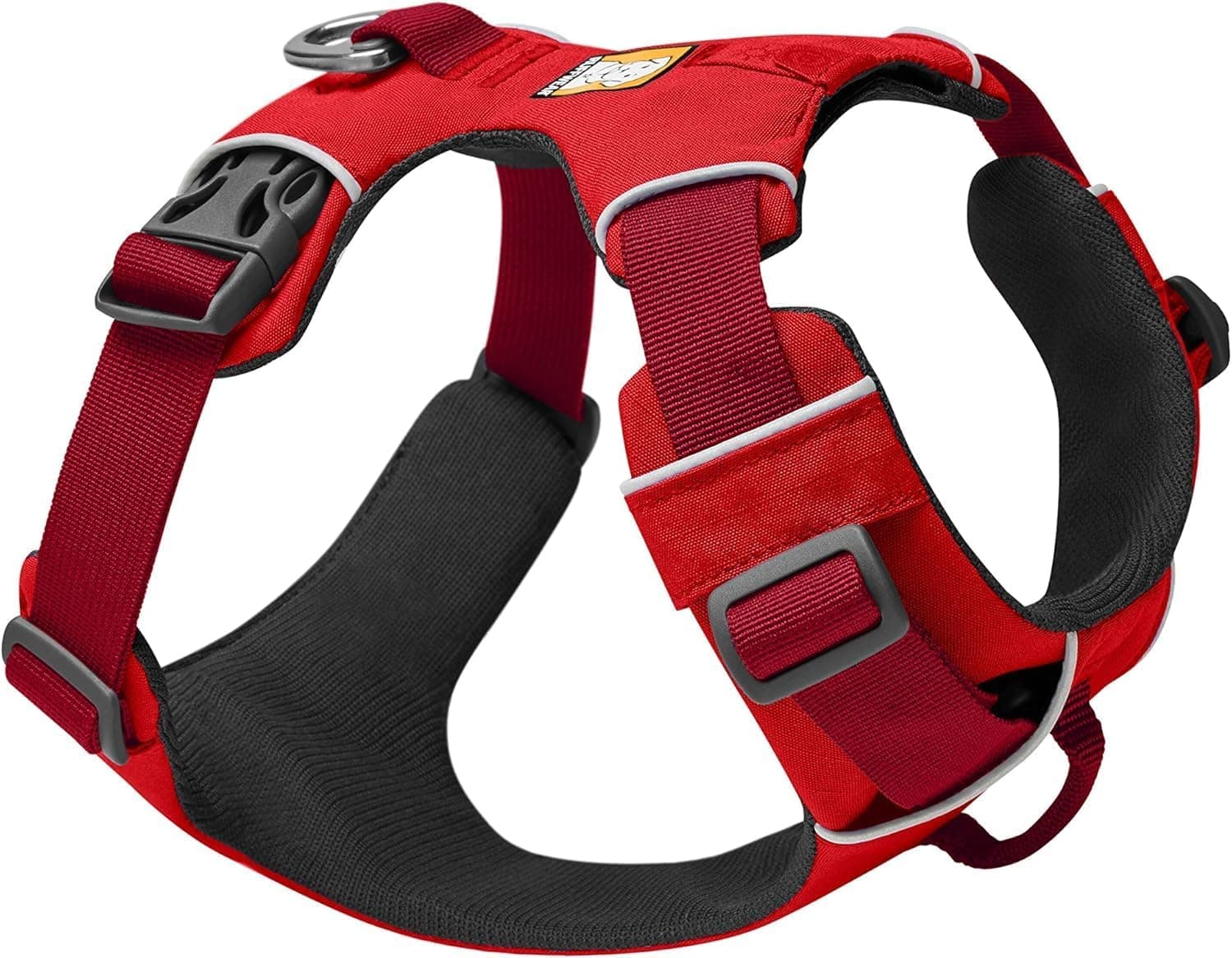
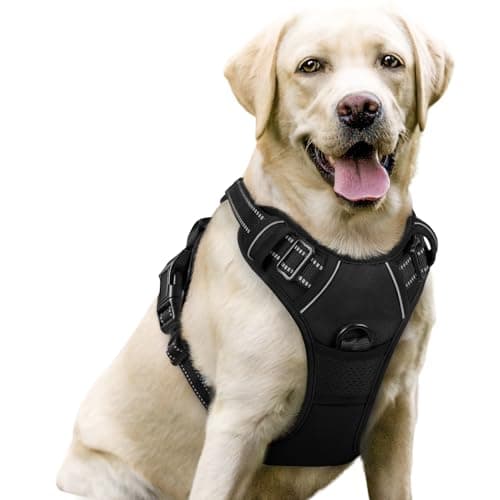
Our research-led shortlist is Ruffwear Front Range for a clearly documented two-point everyday harness, PerfectFit for modular sizing and Rabbitgoo as a lower-cost two-point retailer option. The old Ruffwear Medium/Red affiliate ASIN was unavailable on 20 July, so its earning button now opens an exact product-name search and the manufacturer chart is provided beside it.
The RSPCA advises using a well-fitting comfortable harness as an ethical control option alongside reward-based training. Stop and seek individual help if equipment causes rubbing, distress, coughing, gait change or repeated escape attempts.
What actually matters here
A documented chest attachment and back attachment, with no claim that hardware alone trains the dog.
Exact girth bands and adjustment points rather than breed or weight guesses.
Manufacturer care, materials and fitting warnings separated from untested comfort or durability claims.
A returns or fitting route when the individual dog falls between sizes.
Compatibility with reward-based training and, where appropriate, a double-ended lead used according to the manufacturer’s instructions.
Who this is for
Owners of medium or large dogs who pull hard on normal walks.
New rescue owners still building lead manners and wanting more control.
Anyone trying to reduce strain on arms and shoulders without moving to harsher kit.
Who should skip
Dogs already walking calmly in a simple back-clip harness.
Owners expecting the harness alone to fix poor lead behaviour with no training work.
Very tiny dogs who are usually better served by lighter, smaller-frame harnesses.
Quick questions before you buy
Do no-pull harnesses actually work?
A chest attachment can change leverage and help some handlers redirect a dog. Results depend on the individual dog, fit, lead handling and training; this page does not claim that any product cures pulling.
Is a front-clip harness always better?
No. It offers a steering option but can twist if the fit or lead handling is poor, and research on harness design and gait is limited. Judge the individual dog and stop if movement or comfort changes.
Clearly documented chest and back attachment points
The formerly linked Medium/Red ASIN was unavailable. The retailer search requires the buyer to choose the measured size and seller; the chest loop is webbing, not a second metal ring.
The modular order needs more measurement and may require fitting support. Manufacturer comfort, calming and escape-resistance claims are not treated here as independent test results.
Owners wanting a lower-cost anti-pull option with both clip points
The old direct ASIN is specifically a Large variant. The new retailer search exposes other sizes, but Dog Product Reviews has not compared its hardware, pressure or wear against Ruffwear or PerfectFit.
~£22
£
Recommended picks
Top pick
Best for: Clearly documented chest and back attachment points
Why it made the list: Ruffwear publishes a reinforced chest attachment, aluminium back V-ring, four adjustment points and five girth bands from 33–107 cm. It is our best-documented everyday option, not a tested guarantee that pulling will stop.
Main drawback: The formerly linked Medium/Red ASIN was unavailable. The retailer search requires the buyer to choose the measured size and seller; the chest loop is webbing, not a second metal ring.
Typical price band: ££
Pros
Published 33–107 cm girth range.
Back and chest attachment points.
Four adjustment points and explicit hand-wash care.
Cons
No pull-force or gait test by Dog Product Reviews.
Why it made the list: PerfectFit’s current direct site supplies interchangeable top, front and girth pieces, up to five adjustment points and a front D-ring for steering. The manufacturer’s harness finder is more appropriate than an Amazon search for this modular product.
Main drawback: The modular order needs more measurement and may require fitting support. Manufacturer comfort, calming and escape-resistance claims are not treated here as independent test results.
Typical price band: ££
Pros
Separately selected modular pieces.
Up to five adjustment points.
Front and back attachment options are published.
Cons
No affiliate relationship or independent trial by Dog Product Reviews.
Why it made the list: The current retailer title specifies a front clip, back attachment, handle and adjustable vest construction. It is the lower-cost two-point option where the listing’s exact size chart fits the measured dog.
Main drawback: The old direct ASIN is specifically a Large variant. The new retailer search exposes other sizes, but Dog Product Reviews has not compared its hardware, pressure or wear against Ruffwear or PerfectFit.
Typical price band: £
Pros
Front and back attachment points are listed.
Handle and adjustable straps are listed.
Lower advertised entry price.
Cons
No comparative durability or pressure test by Dog Product Reviews.
Search result requires size, seller and exact-model verification.
For dogs whose recall still needs work and you want the extra safety net.
FAQ
Do no-pull harnesses actually work?
A chest attachment can change leverage and help some handlers redirect a dog. Results depend on the individual dog, fit, lead handling and training; this page does not claim that any product cures pulling.
Is a front-clip harness always better?
No. It offers a steering option but can twist if the fit or lead handling is poor, and research on harness design and gait is limited. Judge the individual dog and stop if movement or comfort changes.
What is the best harness to stop dog pulling?
Our research-led first option is Ruffwear Front Range where its measured size and two attachments fit; PerfectFit is the modular alternative. Both should be paired with reward-based loose-lead training rather than sold as a mechanical cure.
Why is Julius-K9 not shortlisted here?
The standard IDC Powerharness is a back-attachment harness. It remains compared on the main harness page, but it does not meet this page’s requirement for a documented chest steering point.
What to buy alongside
Optional extras that may help with the task on this page. Check size, compatibility and care instructions before buying; these are category searches, not products tested by Dog Product Reviews.
Treat pouch for training
Reinforcement training needs a hands-free treat source. A clip-on treat pouch is under £10 and makes every walk a training opportunity.