Front Clip vs Back Clip Dog Harness: Which Point Should You Use?
Compare front, back and two-point harness attachments by walking job, evidence limits, maker instructions and fit checks.

On this page
- What actually matters
- Who this is for
- What the evidence can — and cannot — tell us
- Back attachment: simple walking, not automatic comfort
- Front attachment: steering option, not training programme
- Two-point use: the maker’s rule comes first
- Fit-check the attachment in movement
- Questions owners still need to resolve
- Use equipment with reward-based loose-lead training
- FAQ
- Equipment that may support the setup
- Useful next pages
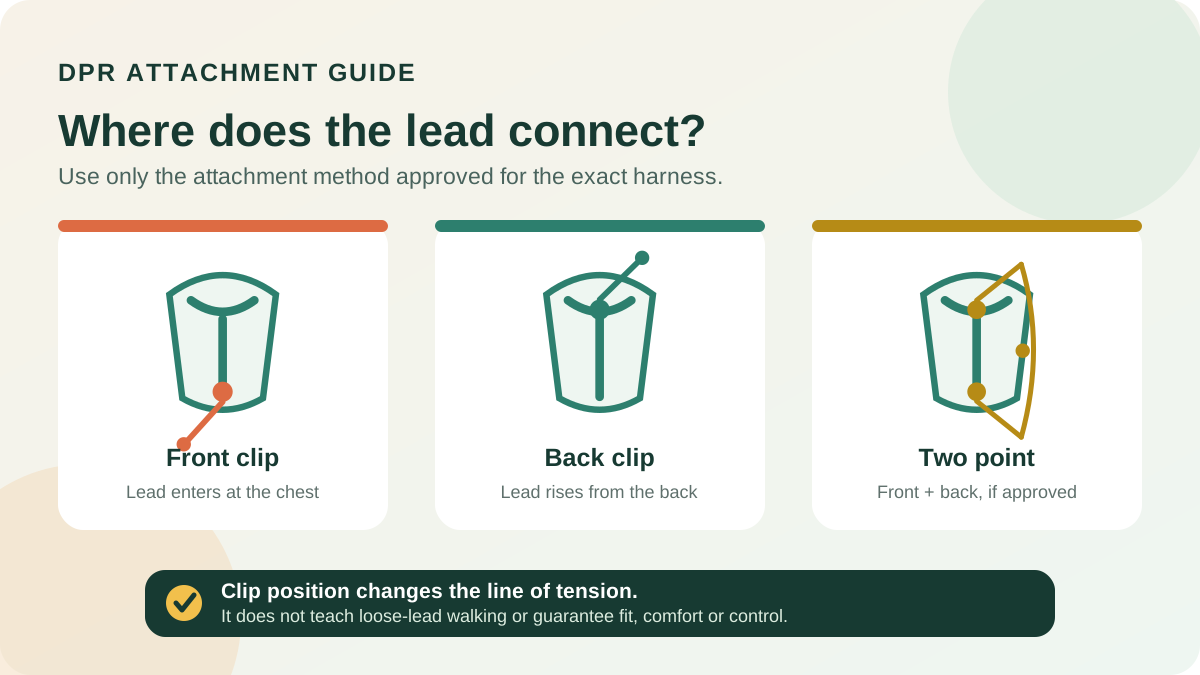
The clip position changes where lead tension enters the harness. A back attachment keeps the line above the dog; a chest attachment can change direction when tension comes on; a two-point setup shares handling between two maker-approved rings.
That is an equipment choice, not a loose-lead lesson. No clip teaches the behaviour by itself, and a front ring is not automatically approved for use alone. Choose the exact harness first, follow its connection instructions and check the fitted result on the individual dog.
Back clip: the simpler everyday attachment when the dog is already manageable and the exact harness remains stable without rubbing, restricting movement or allowing escape.
Front clip: a management option where the exact maker permits it and the handler needs steering while reward-based loose-lead training continues.
Two point: use front and back together only as the maker directs. PerfectFit, for example, says its front D-ring must not be used on its own.
Front clip vs back clip: the job of each setup
This table describes attachment jobs, not universal performance winners. Fit, handling, health and the exact product design still matter.
| Setup | What changes | Potential use | Main limit |
|---|---|---|---|
| Back attachment | The lead line rises from the dog’s back. | Everyday walking when the dog is already manageable and the harness stays stable. | It does not teach a loose lead, and specific studies found greater pulling force in limited back-clip test conditions. |
| Front attachment | Lead tension enters at the chest and may change the dog’s direction or rotate the harness. | Temporary management while teaching loose-lead walking, where the exact maker permits front-only use. | If it migrates, it can cross a leg or alter movement; evidence does not prove a universal welfare or training advantage. |
| Front + back | A double-ended lead connects to two approved rings. | Additional handling options where the harness maker explicitly supports two-point use. | Connection rules differ. Do not assume every front ring is load-bearing or intended to be used alone. |
| Canicross or pulling sport | A purpose-built pulling harness works with a bungee line and runner belt. | Sport-specific forward pulling after suitable preparation and advice. | An ordinary back-clip walking harness is not canicross equipment. |
What actually matters here
- The exact maker’s connection rule: front-only, back-only or two-point use is product-specific.
- Fit in motion: watch for rotation, strap migration, rubbing, shortened stride, a lead crossing a leg or the dog backing out.
- The real job: calm everyday walking, temporary pulling management, escape security and canicross are different equipment decisions.
- Training remains separate: reward slack in the lead and change the difficulty rather than relying on hardware to teach the behaviour.
Who this is for
- Owners deciding which ring to use on a harness they can identify and fit correctly.
- People who need a clear boundary between walking management, loose-lead training and pulling sport.
- Buyers comparing a one-point harness with a maker-approved two-point setup.
Who should skip
- A dog that coughs, seems painful, changes gait, rubs, rotates the harness or repeatedly escapes; stop and seek appropriate veterinary, behaviour or fitting help.
- Anyone looking for a product ranking; use the harness or no-pull buying guides after choosing the required job.
- Canicross buyers; use purpose-designed sport equipment and instruction rather than an ordinary walking harness.
What the evidence can — and cannot — tell us
The 2026 review of dog-worn equipment found that lead tension depends on the dog, handler, training, task and study method. It reports greater pulling in back-clip harnesses than collars in some controlled tests, but says those studies do not explain why. That is not proof that a back clip teaches pulling or that a front clip fixes it.
A 66-dog study of three harness designs found changes in several gait measures, with effects varying across breeds or breed types. It did not compare front and back attachments or establish a universal winner. The useful conclusion for a buyer is to judge the exact design on the individual dog rather than repeat “Y-front”, “front clip” or “back clip” as a guarantee.
Back attachment: simple walking, not automatic comfort
A centred back attachment is straightforward when the dog is already manageable and the harness stays correctly positioned. It does not make the harness comfortable by itself: strap shape, adjustment, coat, body shape and movement determine whether the fitted product rubs or restricts.
Do not use “back clip” as a shortcut for canicross. Canicross UK specifies a purpose-designed pulling harness, bungee line and running belt and warns that poor fit can impair movement. A normal walking harness with a back ring is a different product for a different job.
Front attachment: steering option, not training programme
A chest attachment may help the handler change direction without placing the lead at the neck, but the effect depends on the design, fit, dog and handling. Watch whether the harness twists, the chest line migrates, the lead catches a leg or the dog’s movement changes.
Ruffwear’s current Front Range specification identifies a reinforced chest webbing loop and an aluminium back V-ring. That proves the two attachment points exist; it does not prove DPR has tested comfort, control, pulling reduction or gait.
Two-point use: the maker’s rule comes first
Two rings do not always mean two interchangeable single-point attachments. PerfectFit says its front D-ring is for a double-ended lead connected to both front and back and must not be used alone. Follow that rule for that harness rather than copying a setup from another brand.
Dogs Trust reactive-dog guidance describes a two-point harness with a double-ended lead as one option for extra control. Extra control is not a behaviour treatment or escape guarantee; the dog may still need a veterinary check, a qualified reward-based professional and a separate security plan.
Fit-check the attachment in movement
Dogs Trust advises choosing a harness that does not cross and restrict the shoulders, checking that it stays in position while the dog moves and confirming the dog cannot slip out. Recheck the exact maker’s fit rule after changing which ring carries the lead.
Walk a short, low-distraction route first. Stop using the setup if the harness rotates, a strap enters the armpit, the lead catches a front leg, the dog shortens stride, freezes, coughs, appears painful or can reverse out. Equipment that looks centred while standing can behave differently under tension.
Questions owners still need to resolve
Recent discussions ask whether front clips merely mask pulling, how to use two attachment points, what to do when a chest lead crosses a leg and whether a harness changes gait. The front-clip training debate and two-point handling discussion helped identify those questions; they are anecdotes and opinions, not product evidence. A read-only X scan was too promotional or low-signal to support a claim.
Use equipment with reward-based loose-lead training
The RSPCA loose-lead method rewards the dog when the lead is slack and stops progress when the dog moves far enough to tighten it. The clip can help the handler manage the session, but the reward and repetition teach the behaviour.
If pulling, fear or reactivity makes the walk unsafe, reduce the difficulty and seek qualified help. Do not escalate to painful equipment or repeated jerks because a front or back attachment did not solve the underlying problem.
Quick questions before you buy
Does a front-clip harness stop a dog pulling?
It may change the handler’s steering or the dog’s direction, but it does not teach loose-lead walking by itself. Use it only as the exact maker directs while rewarding a slack lead. Persistent pulling, lunging or fear needs a broader training and safety plan.
Can I use the front ring on its own?
Only if the exact manufacturer says that ring is intended for front-only use. PerfectFit explicitly says its front D-ring must be used with the back ring and a double-ended lead. Do not transfer that or any other brand’s rule to a different harness.
Useful next pages
FAQ
Does a front-clip harness stop a dog pulling?
It may change the handler’s steering or the dog’s direction, but it does not teach loose-lead walking by itself. Use it only as the exact maker directs while rewarding a slack lead. Persistent pulling, lunging or fear needs a broader training and safety plan.
Can I use the front ring on its own?
Only if the exact manufacturer says that ring is intended for front-only use. PerfectFit explicitly says its front D-ring must be used with the back ring and a double-ended lead. Do not transfer that or any other brand’s rule to a different harness.
Does a back-clip harness encourage pulling?
A back clip does not teach the behaviour. Some controlled studies recorded greater pulling force in back-clip harnesses than collars under particular test conditions, but that does not establish the cause or prove that every dog will pull more. Training, context, handling and the individual dog matter.
Can harness design affect movement?
A 66-dog study associated three harness designs with changes in several gait measures, with effects varying across dogs. It did not isolate the effect of a front attachment or prove that fit alone caused each change. Stop if the harness rotates, straps migrate, stride changes or the dog seems uncomfortable, and seek veterinary or fitting advice.
Can I use a normal back-clip harness for canicross?
Do not treat an everyday walking harness as sport equipment. Canicross UK specifies a purpose-designed pulling harness with a bungee line and runner belt plus correct fitting and preparation.
Which clip is best for a reactive dog?
There is no universal clip answer for reactivity. A maker-approved two-point setup may offer extra handling control, but it is not behaviour treatment or an escape guarantee. Ask a vet to rule out pain and use a qualified reward-based behaviour professional where safety is difficult.
Equipment that may support the setup
Optional extras that may help with the task on this page. Check size, compatibility and care instructions before buying; these are category searches, not products tested by Dog Product Reviews.
HALTI Double Ended Dog Lead
Company of Animals publishes three adjustable positions up to 2m. Use it for front-and-back connection only when the exact harness maker permits that setup.
Ad · Find on Amazon →Soft body-measuring tape
Record the exact maker-defined girth or neck measurement before buying and recheck after coat or body-condition changes.
Ad · Find on Amazon →