How to Measure a Dog for a Harness: UK Brand Guide
Measure the points your exact harness maker asks for, compare four current brand methods, then check movement, rubbing and reverse-out fit.

On this page
- What actually matters
- Who this is for
- Step 1: choose the exact harness before measuring
- Step 2: take the maker-required measurements
- Step 3: handle between-size and unusual-shape results
- Step 4: check the fitted harness before relying on it
- What current owner questions changed
- FAQ
- What to buy alongside
- Useful next pages
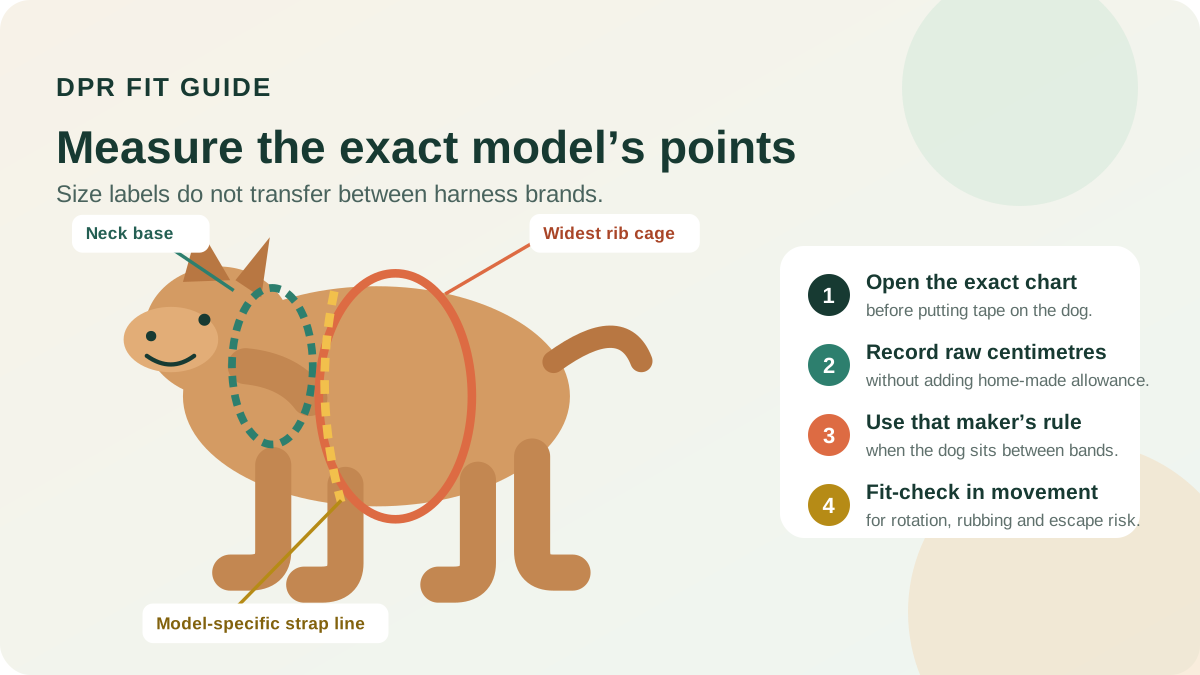
A Medium is not a measurement. Ruffwear Front Range asks for the widest rib-cage girth, Julius-K9 IDC places its girth line a model-specific distance behind the front legs, PerfectFit asks for one snug girth, and Puppia tells buyers to check the exact style's neck and chest chart.
That means the safe order is exact model → official measuring point → exact chart → fit check on the dog. Do not translate a size from another brand, choose from weight alone or add a home-made comfort allowance to the tape.
This page owns measuring and chart interpretation. Product rankings stay on the main dog-harness guide, pulling equipment stays on the no-pull guide, and reverse-out risk stays on the secure-fit guide.
Open the exact model chart first. The measurements and between-size rule can change by brand and even by harness style.
Stand the dog naturally. Use a soft tape on a level, non-slip surface; do not stretch, compress the coat or pull the dog into position.
Measure the maker-defined point. Girth is common, but “just behind the legs” and “widest rib cage” are not always the same line.
Record centimetres without adding allowance. Compare every required number with the current chart for the exact product and size.
Check the fitted harness in motion. It should stay positioned, avoid the shoulder, not rub the armpit and not let the dog reverse out.
Ruffwear harness size-chart checker
Choose the exact model and enter the girth measured around the widest part of the rib cage. This checker reproduces that model's current published centimetre bands and its own boundary rule.
Dog Fit Passport
Record raw measurements to compare with the exact current maker chart. This passport does not choose a size, recommend by breed, or assess fit or safety.
Measure without adding allowance
- Neck: follow the maker's illustrated neck point. For a general record, measure the lower neck above the shoulders without pulling the tape tight; a model may define a different point.
- Chest / girth: follow the maker diagram. This is often the widest rib cage behind the front legs, but strap lines vary. Keep the tape level and touching, not compressing, the coat.
- Back length: follow the maker's endpoints. For a general record, measure from the base of the neck to the base of the tail while the dog stands naturally; do not stretch the body.
Handling and safety limits
Use a flexible tape on a dry dog standing comfortably on a non-slip surface. Do not tighten the tape, compress the coat, force posture or continue if the dog shows pain, panic, coughing, a breathing change or difficulty standing. Ask a vet about pain, breathing or mobility concerns before fitting equipment.
Private measurement record · schema v1
Dog Fit Passport
A record of raw measurements only. It does not select a size, recommend by breed, assess fit or provide a safety guarantee.
- Dog name
- Not recorded
- Neck circumference
- Not recorded
- Chest / girth
- Not recorded
- Back length
- Not recorded
- Coat state
- Not recorded
- Current product / model
- Not recorded
- Current labelled size
- Not recorded
- Stored copy last saved
- Not saved locally
Printing did not create or update the locally stored copy.
Four brands, four measurement instructions
These rows explain how to read four current maker routes; they are not interchangeable size recommendations. Reopen the linked chart immediately before ordering because product specifications can change.
| Exact range | What the maker asks for | Where to measure | If the chart is awkward |
|---|---|---|---|
| Ruffwear Front Range | Girth | Around the widest part of the rib cage. The current Front Range chart spans 33–107cm across five bands. | Ruffwear says to choose the larger Front Range size when the girth sits between bands. |
| Julius-K9 IDC Powerharness | Chest circumference at the IDC strap line; weight is a secondary chart reference | The published point moves from two to four finger widths behind the front legs according to the IDC size group. | Use the IDC chart for the measured strap position. Do not substitute back length or a size from another brand. |
| PerfectFit modular harness | One snug rib-cage girth | All the way around, just behind the front legs. | PerfectFit asks mixed-breed, growing, between-size or unusually shaped dogs to use its sizing support with girth and clear photos. |
| Puppia Soft Harness | Neck and chest for the exact Soft Harness chart | Neck at the base; chest around the widest point behind the front legs. | Puppia says sizing varies by style. Check the exact product chart rather than assuming another Puppia size transfers. |
What actually matters here
- The exact harness model and current official size chart.
- The precise body point the maker defines for each required measurement.
- Whether neck, chest, girth, weight or another dimension is mandatory or only supporting information.
- The maker's own instruction for a dog between bands or with unusual proportions.
- Post-arrival position, movement, rubbing and reverse-out checks.
Who this is for
- Owners buying an exact harness model for the first time.
- Dogs whose neck and chest fall into different chart bands.
- Anyone replacing a harness that rotates, rubs, rides forward or permits backing out.
- Growing dogs or dogs whose coat or body condition has changed.
Who should skip
- Owners rebuying the same model, size and version after confirming that the current chart and fit remain unchanged.
- Dogs with pain, breathing concerns, surgery, skin injury or an existing mobility problem that needs veterinary advice rather than a web sizing guide.
- People choosing attachment style rather than size; use the front-clip versus back-clip guide instead.
Step 1: choose the exact harness before measuring
Start on the maker's page for the exact model and version. A brand-wide size guide can still be wrong for a particular harness, and Small, Medium or Large labels do not transfer reliably between ranges.
Write down the product name and every measurement its chart requires before putting the tape on the dog. For Ruffwear Front Range that is girth. PerfectFit also asks for girth but offers modular sizing support. Puppia Soft uses a fixed neck opening as well as an adjustable chest belt, so its neck and chest chart matters. Julius-K9 IDC defines where its own chest strap should sit.
Weight can help a maker interpret a result, but it does not reveal rib-cage shape, neck opening or strap position. Never choose a harness from kilograms or breed alone.
Step 2: take the maker-required measurements
Place the dog on a flat, non-slip surface in a natural standing position. Use a flexible tailor's tape; if none is available, use non-stretch string and measure the marked length against a ruler. Keep the line level and close to the body without pulling it tight or compressing a thick coat.
Rib-cage girth: follow the model's illustration. Ruffwear says the widest part of the rib cage. PerfectFit says snugly just behind the front legs. Julius-K9 places the line where the IDC chest strap will sit, using a different finger-width offset for different size groups.
Neck or head opening: take this only where the exact model asks. Puppia's current guidance uses neck and chest, while the current PerfectFit finder asks for girth. Do not add neck, back length or weight simply because a generic article lists “three essential measurements”.
Record the raw centimetres and repeat once. A large difference between readings usually means the tape moved to a different body line; return to the maker diagram rather than averaging two different points.
Step 3: handle between-size and unusual-shape results
There is no universal “always size up” rule. Ruffwear currently says to choose the larger Front Range size between bands. Puppia says sizing up is generally recommended, but also says style-specific charts differ. PerfectFit directs mixed, growing, between-size and unusually shaped dogs to its fitting team. Julius-K9 publishes IDC-specific measurement and adjustment instructions.
If the neck and chest land in different bands, a fixed-opening vest may simply be the wrong geometry. If the dog is growing, has changed body condition, wears a thick seasonal coat or has an unusual rib-cage-to-neck proportion, remeasure and use the maker's support or a qualified in-person fitter.
Do not buy extra “growth room” by selecting a loose harness. The finished fit still has to stay positioned and resist a calm reverse-out check.
Step 4: check the fitted harness before relying on it
Dogs Trust says a comfortable finger should fit between strap and body, the harness should not move position while the dog moves, should not cross directly in front of the shoulders and should not allow the dog to slip out. That is a useful welfare boundary, but the exact maker's fit and adjustment instructions still control the product.
Check the harness while the dog stands, walks, turns and lowers its head. Look for rotation, a strap entering the armpit, a chest piece rising onto the throat, a front leg catching the lead, restricted shoulder movement or a buckle sitting on a pressure point.
In a quiet enclosed place, keep hold of the lead and apply only gentle backwards direction to see whether the dog can begin to withdraw a shoulder. This is a fit check, not a force or escape test. Stop using the harness if it slips, twists persistently, rubs, leaves skin changes or causes distress; refit it, contact the maker or seek appropriate veterinary or fitting help.
What current owner questions changed
Current Reddit discussions repeatedly ask what to do when chest and neck fall into different bands, the harness sits in the armpit, a front attachment twists the body, a dog backs out or the diagram labels are unclear. Those anecdotes shaped this troubleshooting order; they are not evidence that one brand fits or performs better.
The resulting rule is deliberately conservative: do not prescribe by breed, weight or a universal finger count. Use the exact chart, check the actual dog in motion and keep the receipt until the fit is proven.
Quick questions before you buy
What is the most important measurement for a dog harness?
Girth is the most common primary measurement, but its exact line and the supporting measurements differ. Ruffwear Front Range uses the widest rib cage; PerfectFit asks for a snug girth just behind the front legs; Julius-K9 IDC defines the strap position by size; Puppia Soft also uses its neck chart. Open the exact product instructions first.
Where exactly should I measure dog girth for a harness?
At the point shown by the exact maker. “Widest rib cage”, “just behind the front legs” and an IDC strap line two to four finger widths behind the legs are not one universal location.
Useful next pages
FAQ
What is the most important measurement for a dog harness?
Girth is the most common primary measurement, but its exact line and the supporting measurements differ. Ruffwear Front Range uses the widest rib cage; PerfectFit asks for a snug girth just behind the front legs; Julius-K9 IDC defines the strap position by size; Puppia Soft also uses its neck chart. Open the exact product instructions first.
Where exactly should I measure dog girth for a harness?
At the point shown by the exact maker. “Widest rib cage”, “just behind the front legs” and an IDC strap line two to four finger widths behind the legs are not one universal location.
Should I add two fingers when measuring?
No. Record the body measurement at the maker-defined point without adding your own allowance. Finger clearance is a post-fitting check, and even that should follow the exact product instructions. Dogs Trust uses one comfortable finger as its general fit boundary.
My dog is between harness sizes — should I size up?
Follow the exact model rule. Ruffwear says to choose the larger Front Range size between bands; PerfectFit asks between-size or unusual-shape owners to use its fitting support. A universal size-up rule can create a loose, escapable fit.
What size harness does a 10kg dog need?
Weight alone cannot select a safe size. Two dogs at 10kg can have different rib-cage, neck and body proportions. Use kilograms only where the exact maker treats weight as a supporting chart value, then size from the required measurements.
Do I need to measure back length for a harness?
Only when the exact product chart asks for it. The current Ruffwear Front Range, PerfectFit and Julius-K9 IDC routes on this page do not use one universal back-length requirement. Do not add it to the HowTo merely because another harness or coat uses it.
How do I measure a dog for a Julius-K9 IDC harness?
Use the current IDC guide. It places the chest circumference where the strap will sit: two finger widths behind the legs for the smallest groups, three for XS/S and four for M through 3XL. Compare that result with the exact IDC chest and weight chart.
How often should I remeasure a puppy?
Remeasure before each purchase and whenever the current harness changes position or adjustment range. Growth rate varies, so this guide does not impose a fixed weekly schedule or buy extra loose room.
What if the harness rubs the armpit or rotates sideways?
Stop relying on it as fitted. Recheck the maker's measurement point and adjustment order, inspect the strap position during movement and contact the maker or a qualified fitter. Persistent rubbing, skin change, pain or distress needs appropriate veterinary advice.
Can a dog wear only a harness in public?
Dogs Trust notes that a dog still needs a collar with an identity tag in public even when walked on a harness. Check the legal requirements that apply where you live and keep the walking attachment decision separate from identification.
What to buy alongside
Optional extras that may help with the task on this page. Check size, compatibility and care instructions before buying; these are category searches, not products tested by Dog Product Reviews.
Soft body measuring tape in centimetres
A flexible, non-stretch tape follows the maker-defined rib-cage or neck line; no particular tape has been tested or ranked by DPR.
Typically under £15
Ad · Find on Amazon →