Dog Collar vs Harness: Where Should the Lead Clip?
Research-led UK collar-versus-harness guidance by lead tension, fit, health, escape risk and identification rules.

On this page
- What actually matters
- Who this is for
- The lead is the connector, not the alternative
- UK collar identification: state the rule precisely
- What collar-pressure research actually shows
- What harness research actually shows
- Pulling and reactivity: equipment manages, training changes
- Puppies: introduce both without an exercise formula
- Questions owners still need to resolve
- Fit-check whichever attachment you choose
- FAQ
- One way to carry collar identification
- Useful next pages
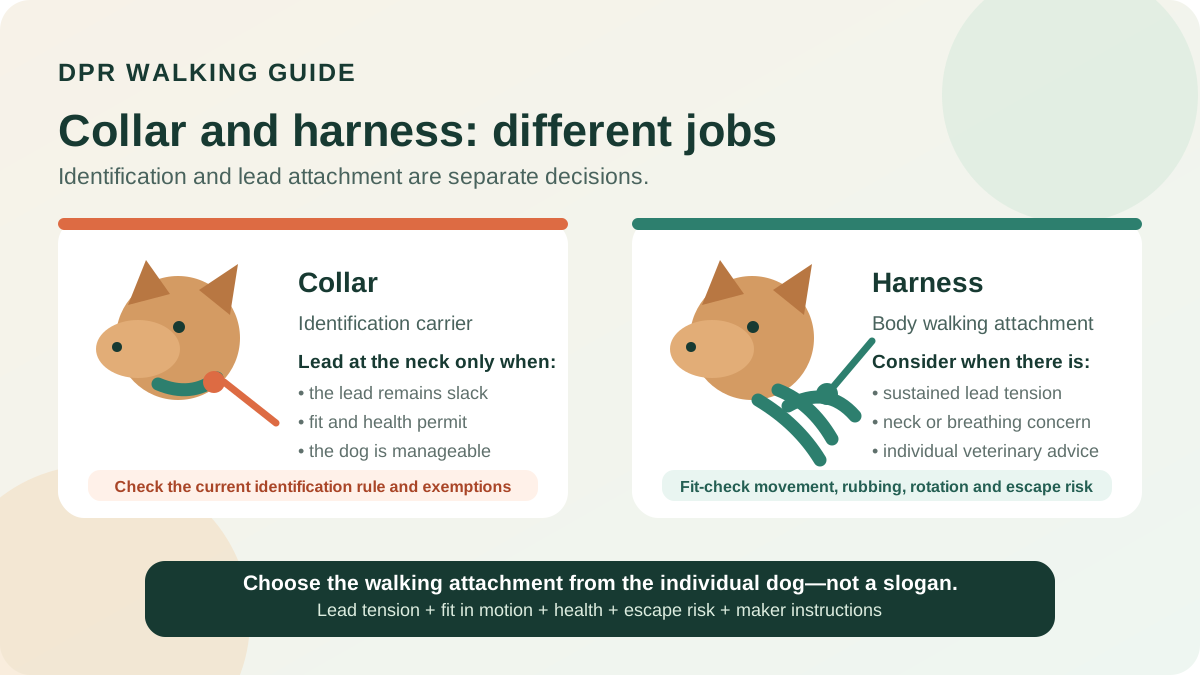
A lead is the connector, so “lead versus harness” compares two things that are not alternatives. The useful question is where the lead should attach: to a collar at the neck or to a harness around the body.
For many UK owners the practical answer is both pieces with separate jobs: a correctly identified collar in public, and a well-fitted harness as the walking attachment when sustained lead tension, coughing, fit or individual veterinary advice makes neck attachment a poor choice. A calm dog on a consistently slack lead may use a correctly fitted flat collar, but that is not a universal rule.
Identification: in Great Britain, and under separate Northern Ireland guidance, most dogs in specified public settings must have the owner’s name and address inscribed on the collar or on a plate or badge attached to it, subject to stated exceptions.
Walking attachment: choose by actual lead tension, fit in motion, health and escape risk—not breed stereotypes or a blanket “harness always wins” slogan.
Training: equipment manages pressure and control; reward-based loose-lead practice changes the walking behaviour.
Dog collar vs harness: scenario guide
This is a decision matrix, not a medical prescription. Stop and ask a vet where coughing, breathing difficulty, pain, gait change or an existing condition is involved.
| Situation | Starting point | Why | What still needs checking |
|---|---|---|---|
| Identification in public | Correctly identified collar | Great Britain and Northern Ireland have collar-identification rules, with stated exceptions. | Exact local rule, current owner details, fit, tag retention and wear. |
| Calm dog; lead stays slack | Correctly fitted flat collar or harness | Little sustained tension may make either a workable attachment. | No coughing, gagging, rubbing, escape, sustained neck pressure or sudden repeated lunging. |
| Dog pulls or coughs at the neck | Well-fitted harness while training continues | This avoids placing the walking lead directly on the neck. | Harness movement, rubbing, shoulder freedom, escape risk and veterinary advice. |
| Flat-faced dog or known airway/neck issue | Ask the veterinary team; often a body harness is preferred | Individual anatomy and condition matter more than a generic product rule. | Breathing, heat, exact diagnosis, fit and emergency advice. |
| Reactive, very strong or escape-risk dog | Individual security and handling plan | One collar or one harness may not address both control and escape risk. | Vet or qualified behaviour help, maker-approved backup connection and safe handling. |
| Puppy | Introduce collar, tag and any harness gradually | The puppy needs identification, fit acclimatisation and reward-based training. | Frequent refitting during growth; no invented breed size or exercise formula. |
What actually matters here
- Lead tension in the real walk: occasional slack handling is different from sustained pulling or repeated lunging.
- Fit in motion: a harness can rotate, rub, restrict or be escaped; a collar can ride, tighten or place tension at the neck.
- Known health concerns: coughing, breathing difficulty, pain, gait change and neck, eye or airway conditions need individual veterinary advice.
- Security: body shape, head-to-neck ratio and escape history matter more than a breed-wide equipment rule.
- Identification law and local restrictions: collar, tag, microchip, lead and muzzle requirements are separate questions.
Who this is for
- Owners deciding where to attach the walking lead while keeping identification requirements separate.
- Puppy owners introducing collar and harness equipment without invented growth or exercise rules.
- People whose dog pulls, coughs, freezes in a harness or has escaped one setup.
Who should skip
- A dog with breathing difficulty, persistent coughing, pain, sudden behaviour change or changed gait; seek veterinary advice rather than relying on this equipment guide.
- Anyone needing a product shortlist before the attachment job is clear; use the linked commercial guides after making the decision.
- Owners dealing with dangerous lunging or repeated escape without professional support and a properly assessed backup plan.
The lead is the connector, not the alternative
A lead can attach to a collar, harness or other purpose-designed restraint. The choice changes where tension is applied, while the lead itself remains the connection to the handler. That is why buying a “better lead” does not settle collar versus harness.
Keep the jobs separate: identification, everyday walking, pulling management, escape security, mobility assistance and vehicle restraint all need different evidence. An ordinary walking harness is not automatically a mobility, anti-escape or car-safety product.
UK collar identification: state the rule precisely
In Great Britain, the Control of Dogs Order 1992 requires most dogs on a highway or in a place of public resort to wear the owner’s name and address on the collar or an attached plate or badge. The Order lists exceptions, so “every dog, everywhere, regardless” is too broad.
Northern Ireland publishes separate guidance requiring most dogs to wear a collar with the owner’s name and address, again with listed exceptions. A microchip does not replace the collar-identification rule. Check current local restrictions as well as any dog-specific legal conditions.
What collar-pressure research actually shows
A 2020 Veterinary Record study tested seven collars and one slip lead on a plastic cylinder with a pressure sensor. Under the simulated firm pull, strong pull and jerk conditions, none produced pressure low enough for the authors to say injury risk was mitigated.
That supports caution when a dog pulls into a collar. It does not measure clinical injury rates, a living dog’s shifting tissues or every collar and walking pattern. Using it to assert a fixed list of tracheal, thyroid, eye or neck outcomes would go beyond what the study established.
What harness research actually shows
A harness moves the walking attachment away from the collar, but it is not impact-free. A 66-dog study of three harnesses found changes across several gait measures, with effects varying across breed or breed type. It supports individual assessment rather than “Y-front is always best” or “every back clip is comfortable”.
The 2026 veterinary review reports greater pulling force in back-clip harnesses than collars in some specific tests but notes the studies do not explain why. A harness does not teach pulling, and a collar does not teach a loose lead. Context, reinforcement and handler technique remain part of the result.
PDSA’s BOAS guidance advises attaching the lead to a harness rather than a collar for flat-faced dogs because neck pressure can worsen breathing problems. That supports the matrix starting point, while diagnosis, breathing change and exercise advice remain veterinary decisions.
Pulling and reactivity: equipment manages, training changes
PDSA’s loose-lead guidance recommends a harness where a dog pulls to reduce neck harm, while teaching slack-lead walking through consistent rewards and stopping when the lead tightens. The RSPCA likewise recommends a comfortable, well-fitting harness and reward-based training rather than painful equipment.
Lunging, fear and escape history are not solved by declaring one attachment universally better. A maker-approved two-point setup may provide extra handling options, while a veterinary or qualified behaviour professional addresses pain, fear and the training plan.
Puppies: introduce both without an exercise formula
PDSA puppy guidance advises getting a puppy used to a collar and tag and, if using a harness, introducing its fit and feel gradually. Growth means both items need frequent checks and adjustment.
The popular “five minutes per month, twice a day” formula is unrelated to collar-versus-harness intent and is not a sound equipment rule. Choose the walking attachment for the individual puppy, use reward-based training and ask the veterinary team about exercise and any health concern.
Questions owners still need to resolve
Current discussions ask whether a dog needs both items, whether harnesses cause pulling, why a dog freezes in one setup, how to manage mismatched neck and chest fit and what changes for a reactive or escape-prone dog. A security discussion, vet-versus-trainer debate and greyhound equipment question helped identify those gaps; they are anecdotes, not medical, fit or product evidence. A read-only X scan was too low-signal to support a claim.
Fit-check whichever attachment you choose
Dogs Trust advises that a harness should not cross and restrict the shoulders, should stay in position during movement and should not allow the dog to slip out. It also recommends checking collar, harness and lead for wear.
Start in a quiet place and inspect the dog while standing, turning and walking. Stop if there is coughing, gagging, altered breathing, pain, rubbing, rotation, shortened stride, freezing or reverse-out risk. A product label or breed list does not overrule what happens on the individual dog.
Quick questions before you buy
Is a dog harness always better than a collar?
No universal answer fits every dog. A harness avoids attaching the walking lead at the neck and is a sensible starting point where there is pulling or veterinary concern, but its design and fit can still affect movement, rubbing and escape security. A calm dog on a consistently slack lead may use a correctly fitted flat collar.
Should a dog wear both a collar and harness?
Often, yes, because they can serve separate jobs: the collar carries required identification and the harness carries the walking lead. Check the applicable identification rule and fit both items so they do not interfere with each other.
Useful next pages
FAQ
Is a dog harness always better than a collar?
No universal answer fits every dog. A harness avoids attaching the walking lead at the neck and is a sensible starting point where there is pulling or veterinary concern, but its design and fit can still affect movement, rubbing and escape security. A calm dog on a consistently slack lead may use a correctly fitted flat collar.
Should a dog wear both a collar and harness?
Often, yes, because they can serve separate jobs: the collar carries required identification and the harness carries the walking lead. Check the applicable identification rule and fit both items so they do not interfere with each other.
Do harnesses make dogs pull more?
A harness does not teach pulling. Some controlled tests found greater force in back-connected harnesses than collars under particular reward conditions, but that does not establish the cause or predict every walk. Reward-based loose-lead training remains necessary.
Should a puppy use a collar or harness?
Introduce a correctly fitted collar and tag for identification and acclimatise any harness gradually. Choose the walking attachment for the individual puppy, recheck fit frequently during growth and ask the veterinary team about health or exercise concerns.
What if my dog coughs or gags on the collar?
Stop putting sustained lead tension at the neck and ask the veterinary team, particularly if coughing, gagging or breathing change persists. A well-fitted harness may be part of the management plan, but it is not a diagnosis or treatment.
Do sighthounds always need a martingale collar?
Do not choose from breed name alone. Head-to-neck ratio and escape history matter, and a martingale must be adjusted to tighten only to its safe limit without constant neck pressure. Some dogs need a secure body harness or backup connection; seek specialist fitting help if escape is a concern.
Which is better for a reactive or very strong dog?
One collar or harness may not cover both handling and escape security. Use an individually assessed setup, follow maker instructions for any backup connection and work with a vet or qualified reward-based behaviour professional rather than relying on equipment alone.
One way to carry collar identification
Optional extras that may help with the task on this page. Check size, compatibility and care instructions before buying; these are category searches, not products tested by Dog Product Reviews.
Engraved dog identification tag
A tag is one option for carrying the owner’s name and address on a plate or badge attached to the collar; check the applicable rule, engraving layout and attachment compatibility.
Ad · Find on Amazon →