Affiliate disclosure: Some links below are affiliate links. If you buy through one, Dog Product Reviews earns a commission at no extra cost to you. As an Amazon Associate I earn from qualifying purchases. Full disclosure.
Evidence: research-led. Dog Product Reviews has not walk-tested, load-tested or durability-tested these exact leads. This guide compares current published dimensions, materials, attachment designs, intended uses and UK buying routes; manufacturer claims are not presented as independent findings. How we assess products.
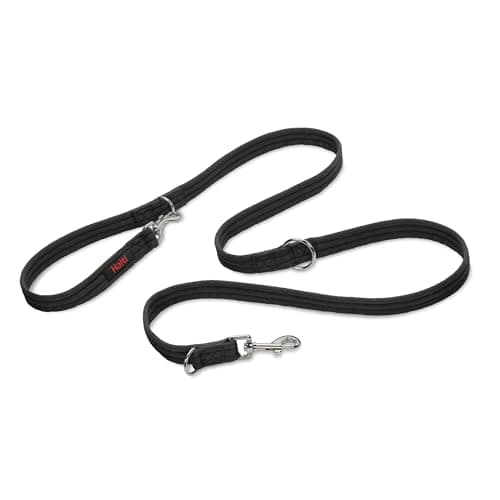
HALTI Training Lead — Large, Black, 2m (14320B / LL03)
A correctly sized double-ended lead used with a compatible harness or headcollar.
Evidence: research-led
Main drawback: Large is 2.5cm wide and the maker’s current maximum dog weight is 52.5kg. Multiple configurations take practice, and Dog Product Reviews has not tested hand comfort, control or durability.
Skip if: Owners who already know they need a specific type — go straight to the retractable, slip lead, or collar sub-pages.
Dogs with different size, strength, training and walking environments need different lead setups. A calm small dog in an open field presents a very different use case from a strong, easily distracted dog beside traffic.
That is why this guide separates fixed leads, double-ended training leads, long lines and retractable leads instead of treating one product as right for every dog.
This research-led comparison covers the main lead types available in the UK, what each is intended for and the limitations to check before buying.
Quick answer:
For an adjustable double-ended setup: HALTI Training Lead — Large, Black, 2m — use only where the exact width, weight limit and compatible attachment arrangement suit the dog.
For an open-space retractable format: Flexi New Classic Tape Lead — use the search to choose the exact tape length and dog-weight band; a retractable is not a close-control traffic lead.
For pulling: equipment does not teach loose-lead walking. Use a compatible setup and reward-based training, and stop if the dog coughs, struggles or is distressed.
Near traffic, crowds or other close hazards, use a setup that keeps the dog within predictable control and follow the exact lead instructions.
Who this is for
Owners choosing their first lead or replacing a worn-out one.
Anyone working out which lead type suits their dog's walking style.
New dog owners who want to understand the differences before buying.
Who should skip
Owners who already know they need a specific type — go straight to the retractable, slip lead, or collar sub-pages.
Anyone looking for harness advice rather than lead advice — see our harness hub instead.
What is the best dog lead in the UK?
The linked HALTI Training Lead is the fixed Large, Black, 2m variant. Company of Animals publishes two trigger clips, three adjustable lengths and comfort-hold webbing. It is not an anti-pull device by itself, and a two-point arrangement should be used only where the exact harness or headcollar maker permits it.
A fixed lead can be the simpler route when the handler needs predictable close control. Choose the length, width, connector and published dog-weight limit for the individual dog rather than assuming a material or price is universally suitable.
Are retractable dog leads safe in the UK?
A retractable changes the available distance and requires active line and brake management. It may be considered in a clear open area only when the exact model’s dog-weight limit, instructions and surroundings are suitable; it is not a substitute for recall or close control.
Do not claim that tape is universally safer than cord without comparative evidence. Keep any line away from people and animals, inspect the housing, tape or cord and connector before use, and retire damaged equipment.
What is the best training lead for dogs that pull?
A double-ended lead can support a documented two-point arrangement, but it does not train loose-lead walking by itself. Confirm that the exact harness or headcollar permits both attachment points and use reward-based training rather than treating extra hardware as a behavioural result.
A slip lead tightens around the neck and therefore needs an individual welfare decision and careful handling. Do not use one as a shortcut for pulling or where neck pressure, coughing, airway concerns or distress are present; seek appropriate professional guidance.
Standard Lead vs Retractable
Fixed lead: provides a set maximum distance; compare length, width, connector, instructions and dog-weight limit.
Retractable: changes the available distance through a housing and brake. Consider it only for an appropriate open environment and exact model; see the dedicated guide for its handling checks.
Lead vs Harness
A well-fitted harness can reduce neck pressure for a dog that pulls, but it is not automatically safer for every body shape or use. Keep the legally required identification on the collar where applicable, and choose the walking attachment from the individual fit and handling needs covered in our collar-versus-harness guide.
Quick questions before you buy
What length dog lead is best?
There is no universal length. Choose for the environment, the dog’s size and behaviour, the handler’s control needs and the exact maker’s dog-weight limit and instructions.
Does a double-ended lead stop pulling?
No. It can support a maker-documented two-point arrangement, but equipment does not teach loose-lead walking. Pair any suitable setup with reward-based training.
A correctly sized double-ended lead used with a compatible harness or headcollar
Large is 2.5cm wide and the maker’s current maximum dog weight is 52.5kg. Multiple configurations take practice, and Dog Product Reviews has not tested hand comfort, control or durability.
An exact-name search for a tape retractable after choosing length and dog-weight band
Dog Product Reviews has not brake-, line- or drop-tested a selected variant. A retractable changes the available distance and is not the close-control route for traffic, crowds or confined spaces.
The exact 2.2m model returned by the current direct Amazon route
Dog Product Reviews has not wet-grip-, connector-, load- or cold-tested it. Verify width, dog suitability and current instructions on the exact offer before buying.
£
Recommended picks
Top pick
Best for: A correctly sized double-ended lead used with a compatible harness or headcollar
HALTI Training Lead — Large, Black, 2m (14320B / LL03)£
Why it made the list: The linked Amazon offer is the Large, black 2m Training Lead. Company of Animals describes two trigger clips, three adjustable lengths and comfort-hold webbing for use with compatible harnesses or headcollars; it is not an anti-pull device by itself.
Main drawback: Large is 2.5cm wide and the maker’s current maximum dog weight is 52.5kg. Multiple configurations take practice, and Dog Product Reviews has not tested hand comfort, control or durability.
Typical price band: £
Pros
Exact Large, Black, 2m variant disclosed.
Two trigger clips and three maker-published lengths.
Flexi New Classic Tape Lead — an exact-name search for a tape retractable after choosing length and dog-weight band
Julius-K9 Color & Gray Super-Grip Lead — the exact 2.2m model returned by the current direct Amazon route
Best for: An exact-name search for a tape retractable after choosing length and dog-weight band
Flexi New Classic Tape Lead£
Why it made the list:Flexi’s current Classic range includes tape variants in several sizes and lengths. The Amazon destination is a search, so confirm the selected item’s exact tape length, maximum dog weight, controls and instructions.
Main drawback: Dog Product Reviews has not brake-, line- or drop-tested a selected variant. A retractable changes the available distance and is not the close-control route for traffic, crowds or confined spaces.
Typical price band: £
Pros
Maker publishes multiple tape lengths and dog-weight bands.
Julius-K9 Color & Gray Super-Grip Lead — the exact 2.2m model returned by the current direct Amazon route
HALTI Training Lead — Large, Black, 2m (14320B / LL03) — a correctly sized double-ended lead used with a compatible harness or headcollar
Best for: The exact 2.2m model returned by the current direct Amazon route
Julius-K9 Color & Gray Super-Grip Lead£
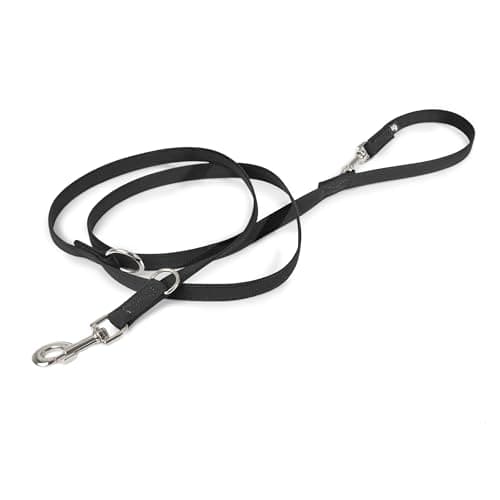
Why it made the list: Amazon identifies the fixed route as Julius-K9 Color & Gray Super-Grip Lead, model 216GM-DP. It is retained for exact identity rather than an unverified grip, weather or durability result.
Main drawback: Dog Product Reviews has not wet-grip-, connector-, load- or cold-tested it. Verify width, dog suitability and current instructions on the exact offer before buying.
There is no universal length. Choose for the environment, the dog’s size and behaviour, the handler’s control needs and the exact maker’s dog-weight limit and instructions.
Does a double-ended lead stop pulling?
No. It can support a maker-documented two-point arrangement, but equipment does not teach loose-lead walking. Pair any suitable setup with reward-based training.
When should I avoid a retractable lead?
Avoid it where the changing distance conflicts with safe close control, including traffic, crowds and confined areas. Inspect the exact housing, line and connector, follow its weight limit and instructions, and retire damaged equipment.
Should the lead attach to a collar or harness?
That depends on the individual fit, health, walking behaviour and exact equipment. Keep legally required owner identification on the collar where the applicable rules require it; the walking attachment is a separate decision.
What to buy alongside
Optional extras that may help with the task on this page. Check size, compatibility and care instructions before buying; these are category searches, not products tested by Dog Product Reviews.
Dog collar ID tag
Where the applicable GB or NI collar-identification rules require owner details, a tag is one way to carry them. Reflectivity is optional and does not replace active visibility.