Affiliate disclosure: Some links below are affiliate links. If you buy through one, Dog Product Reviews earns a commission at no extra cost to you. As an Amazon Associate I earn from qualifying purchases. Full disclosure.
Evidence: research-led. This is a research-led comparison, not a hands-on comfort, pull-strength or durability test. We checked the exact products and retailer routes against current manufacturer and retailer information, then applied published RSPCA fit guidance, Blue Cross walking guidance and the separate collar-identification frameworks for Great Britain and Northern Ireland. Manufacturer descriptions are labelled as such; prices and retailer ratings are not treated as proof of comfort. How we assess products.
Compare one measurement with published collar bands
Enter the neck circumference measured where the collar will sit. The checker lists every exact manufacturer band that contains that number; it does not choose a product, diagnose skin or prove comfort or escape security.
Best value padded range when one of the published 35–63 cm bands fits.
Evidence: research-led
Main drawback: Amazon search results can mix colours and sizes, so confirm “Ancol Viva Padded Collar”, the centimetre range and final basket. We found no independent rub, escape or buckle-strength test for this range.
Skip if: Do not open a retailer until the neck is measured. Skip any variant whose published range, contact points or security cannot be confirmed for the individual dog.
The most comfortable dog collar is not simply the one with the thickest padding. Fit, seam placement, buckle bulk, trapped moisture and the dog’s coat all affect rubbing, and no collar can be called rub-proof for every dog.
The RSPCA advises checking that two fingers fit comfortably between the collar and neck. That practical check matters more than a Small, Medium or Large label because the linked products use different size ranges.
This guide compares the specified products behind each retailer button, explains what is and is not verified, and separates everyday identification from walking pressure and escape risk.
Quick answer:
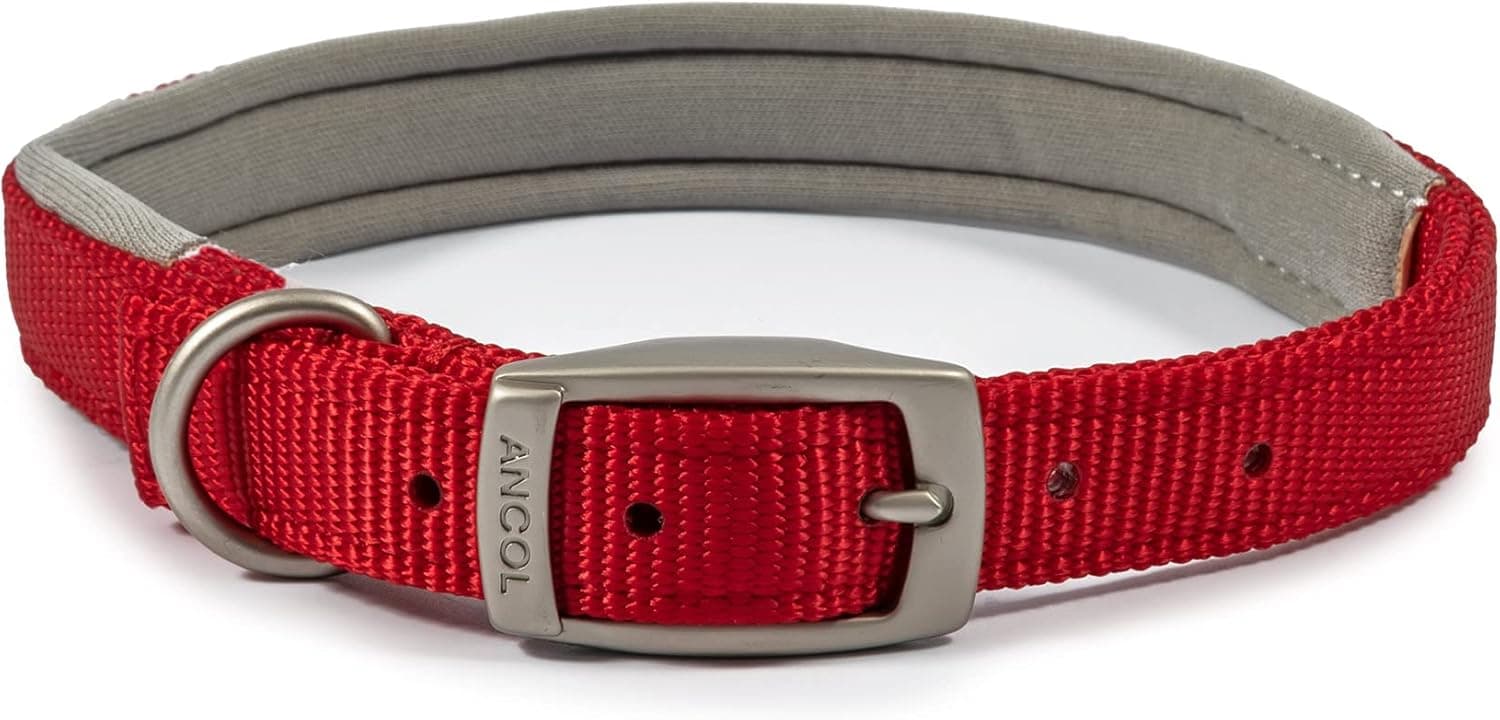
Our value pick is the Ancol Viva Padded range, which has five published size bands from 35–63 cm. The Amazon button now uses an exact-name search so you can select the band that matches the measured neck instead of being forced into the old red Size 8 variant.
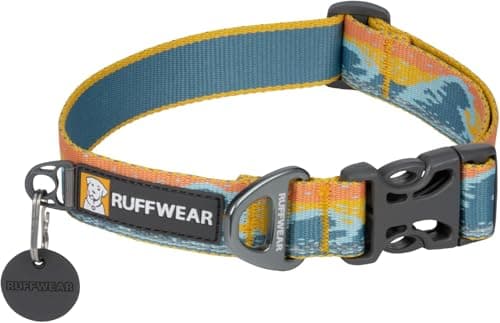
The Ruffwear Crag is the better-specified active option: the exact linked Rising Wave Medium fits 36–51 cm and Ruffwear lists reflective webbing, an aluminium V-ring, a separate ID point and a tag silencer. We have not independently wear-tested or break-tested it.
There is no universally most comfortable dog collar. Measure first, use the RSPCA two-finger fit check, inspect the neck for rubbing and treat escape control or lead attachment as separate decisions.
Comfort check: match the collar to the actual condition
Use the neck, coat and walking job to decide what needs checking before comparing products. No material or padding can guarantee comfort for every dog.
Condition or job
What to compare
Relevant route
Stop or skip when
Growing puppy
Current neck measurement, adjustment left and buckle bulk; remeasure frequently
Ancol Viva: compare only the published band that contains the measured neck
The closest band is loose now, near its limit or identified only as Small/Medium/Large
Wet or muddy use
Inner surface, seams, care instructions and whether the collar dries fully
Ruffwear Crag: published hand-wash and air-dry care; Ancol Viva: weatherproof is a manufacturer description, not a DPR test
Moisture, grit or an edge repeatedly sits against the same skin or coat area
Long or feathered coat
Seam, adjuster and buckle contact; check for trapped hair after fitting
No pick is proven rub-free; choose only after inspecting the exact contact points
Hair catches, a bald patch appears or the dog scratches at the collar
Redness, broken skin, swelling or pain
Remove the collar from the affected area and assess the skin problem
No retailer route: ask a vet about persistent or significant changes
Do not solve a skin problem by buying thicker padding
Pulling, coughing or repeated neck pressure
Separate the ID collar from the walking attachment
Use the measured harness guidance rather than choosing a stronger collar
Do not treat collar padding as protection from lead pressure
What actually matters here
Exact size range: measure the neck and compare centimetres, not just the size name.
Inner surface, seam placement, moisture retention and buckle bulk: padding alone does not guarantee comfort.
Published hardware and materials: useful for comparison, but not a substitute for an independent break or wear test.
Care instructions and drying needs after wet or muddy walks.
Escape risk and lead attachment: these require an individual fit decision and may call for a harness or professionally fitted limited-slip collar.
How we researched comfortable dog collars
We matched each affiliate destination to the exact product variant exposed by the retailer on 20 July 2026. We then checked published construction and sizing against Ruffwear’s Crag specification and Ancol’s current Viva range.
Start with fit. The linked RSPCA rescue-dog guide says two fingers should fit comfortably between collar and neck. A collar that slips over the head needs an individual fit reassessment rather than a near-size guess. Recheck after coat changes, grooming and growth instead of relying on the size label.
Then inspect the contact points: the inner edge, seams, adjuster and buckle should not sit on an irritated patch or repeatedly catch the coat. Padding may help some dogs, but it can also retain water or add bulk; no construction guarantees comfort for every neck shape and coat.
Check the skin after the first short walks and after wet use. Stop using the collar if it produces redness, broken skin, swelling, pain or persistent hair loss, and ask a vet about an ongoing problem.
Types of dog collar explained
Flat collars use a pin buckle or side-release clip and commonly carry an ID tag. Padded collars add a softer or thicker inner layer, but the individual fit still determines whether an edge or buckle rubs.
A limited-slip or half-check collar tightens only to an adjusted limit. RSPCA kennel guidance says it should be considered when a dog may slip a standard collar, fitted by competent staff and adjusted so two fingers still fit when tightened; it should not maintain constant pressure.
A headcollar is a separate handling aid around the muzzle. Introduce one gradually, follow its own fitting instructions and avoid sudden lead jerks; it does not replace an ID-bearing collar where the Control of Dogs Order applies.
Best padded dog collars: when comfort matters most
Padding is one feature, not proof of comfort. Compare the measured range, seam position, buckle bulk and care instructions, then watch the individual dog for rubbing or trapped moisture.
The Ancol Viva is the lower-cost padded range, with five published bands spanning measured necks from 35–63 cm. The linked Ruffwear Crag covers 36–51 cm and has more detailed published material and care specifications, but neither has been independently comfort-tested by us.
If the selected retailer variant does not match the measurement, change the selector or choose another collar. A discounted price is never a reason to accept the wrong fit.
Best puppy collar: buy adjustable, not premium
For a growing puppy, prioritise a light collar with enough adjustment and remeasure frequently. The RSPCA two-finger check still applies, but growth means a fit that was correct last week may not remain correct.
The linked Heritage collar is Medium, and its current retailer API title does not provide the centimetre range. Do not treat the word “Medium” or the budget price as evidence that it will fit a particular puppy.
Use calm, gradual collar familiarisation. For a puppy that pulls, attach the walking lead to a correctly fitted harness rather than making the collar carry repeated neck pressure.
Limited-slip collars: only when the fit problem calls for one
Dogs whose head shape allows a correctly fitted flat collar to slip may need a properly adjusted limited-slip or half-check collar. Breed alone does not determine the answer, and the three products compared above are flat collars rather than escape-control recommendations.
The RSPCA kennel guide says a half-check should be fitted by competent staff when there is a slipping risk, should allow two fingers when tightened and should not put constant pressure on the neck. Ask a qualified reward-based trainer or welfare professional to check the fit if you are unsure.
Great Britain and Northern Ireland: collar identification
In Great Britain, the Control of Dogs Order 1992 says that, subject to its listed exceptions, a dog on a highway or in a place of public resort must wear a collar bearing the owner’s name and address, either on the collar or on a plate or badge attached to it.
Northern Ireland has a separate framework. Official nidirect guidance says dogs must wear a collar with the owner’s name and address inscribed on it or on an attached plate or badge, subject to the exceptions it lists. It also explains the separate licensing and microchipping duties.
Neither source is replaced by an affiliate product description. A current phone number can help a quick reunion, but check the current official rule for where you live and use the dog-tag guide to separate the legal information from product choice.
When a collar isn't enough
Blue Cross guidance advises attaching the lead to a harness so a dog that pulls does not experience pressure around the neck. The collar can still carry the legally required owner details where the Control of Dogs Order applies.
A harness is not automatically comfortable or escape-proof either: measure it, follow its fitting instructions and check that it does not restrict movement or rub behind the legs.
Quick questions before you buy
What is the most comfortable dog collar?
There is no universal winner because neck shape, coat, fit and moisture exposure differ. Of the products researched here, the Ancol Viva is the lower-cost padded range across published 35–63 cm bands and the Ruffwear Crag has the most detailed published specification for 36–51 cm. Neither has been hands-on comfort-tested by us.
How tight should a dog collar be?
The linked RSPCA rescue-dog guide says two fingers should fit comfortably between collar and neck. A collar that slips over the head needs an individual fit reassessment rather than a near-size guess. Check the fit frequently on puppies and after grooming or coat changes.
We have not independently tested long-term comfort, reflectivity or break strength. Verify the exact Medium variant, size, colour, seller, stock and final price before paying.
Best value padded range when one of the published 35–63 cm bands fits
Amazon search results can mix colours and sizes, so confirm “Ancol Viva Padded Collar”, the centimetre range and final basket. We found no independent rub, escape or buckle-strength test for this range.
The retailer API title did not expose a centimetre range, so confirm the selector against your measured neck before buying. We have not run a comparative comfort or durability test.
£
Recommended picks
Best for: Best-specified active option for 36–51 cm necks
Ruffwear Crag Collar££
Why it made the list: Ruffwear publishes a 36–51 cm range for the linked Medium, plus reflective Tubelok polyester webbing, an anodised aluminium V-ring, separate ID point, silicone tag silencer and side-release buckle.
Main drawback: We have not independently tested long-term comfort, reflectivity or break strength. Verify the exact Medium variant, size, colour, seller, stock and final price before paying.
Typical price band: ££
Pros
Published fit range is 36–51 cm for the exact linked Medium.
Ruffwear specifies reflective webbing, an aluminium V-ring and a separate ID point.
Silicone tag silencer is included.
Official care instructions are hand wash with mild detergent and air dry.
Cons
No independent comfort, reflectivity, wear or break-strength test by Dog Product Reviews.
The premium may be poor value for a dog that is still growing.
Only the linked Rising Wave Medium is assessed; other variants require a fresh check.
Best for: Best value padded range when one of the published 35–63 cm bands fits
Ancol Viva Padded Collar£
Why it made the list: Ancol publishes five Viva sizes from 35–63 cm and describes the range as lightweight and weatherproof, with durable poly-weave, padding, a satin buckle and ID loop. The exact-name Amazon search lets the buyer select a measured size instead of forcing the old red Size 8 variant.
Main drawback: Amazon search results can mix colours and sizes, so confirm “Ancol Viva Padded Collar”, the centimetre range and final basket. We found no independent rub, escape or buckle-strength test for this range.
Typical price band: £
Pros
Five published size bands cover measured necks from 35–63 cm.
Ancol specifies a satin buckle and a separate ID loop.
Manufacturer describes the range as lightweight and weatherproof.
Exact-name search avoids forcing the old largest-size variant.
Cons
Search results require exact product and centimetre-range confirmation.
No independent comfort, rub, escape or strength test by Dog Product Reviews.
Ruffwear Crag Collar — best-specified active option for 36–51 cm necks
Best for: Budget pin-buckle padded option; linked Medium
Ancol Heritage Nylon Padded Collar£
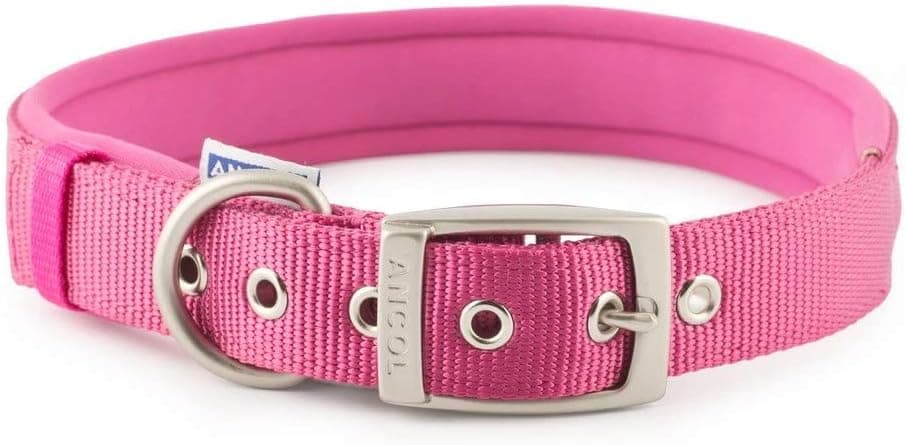
Why it made the list: The current retailer data names the exact linked variant as Raspberry Medium and specifies nylon, neoprene air-cushion padding and a pin buckle. It passed our availability check at the time of review.
Main drawback: The retailer API title did not expose a centimetre range, so confirm the selector against your measured neck before buying. We have not run a comparative comfort or durability test.
Typical price band: £
Pros
Retailer title specifies nylon with neoprene air-cushion padding.
Pin-buckle fastening is identified on the exact listing.
Lower listed price than the other two options when checked.
Cons
Centimetre fit range was not present in the API title; verify before buying.
No independent comfort, wear or strength test by Dog Product Reviews.
No reflective feature was verified for the exact linked variant.
Carry treats, poo bags and essentials without stuffing pockets.
FAQ
What is the most comfortable dog collar?
There is no universal winner because neck shape, coat, fit and moisture exposure differ. Of the products researched here, the Ancol Viva is the lower-cost padded range across published 35–63 cm bands and the Ruffwear Crag has the most detailed published specification for 36–51 cm. Neither has been hands-on comfort-tested by us.
How tight should a dog collar be?
The linked RSPCA rescue-dog guide says two fingers should fit comfortably between collar and neck. A collar that slips over the head needs an individual fit reassessment rather than a near-size guess. Check the fit frequently on puppies and after grooming or coat changes.
Does my dog need a collar if they wear a harness?
Great Britain and Northern Ireland have separate collar-identification frameworks, each with stated exceptions. The official sources say the owner’s name and address must be on the collar or an attached plate or badge in the circumstances they cover. A harness can carry walking pressure but does not automatically replace the identification requirement.
Why is my dog’s collar rubbing or causing hair loss?
Possible contributors include the wrong size, a seam or buckle sitting on one point, trapped moisture, dirt or continuous friction. Remove the source of rubbing, check the skin and seek veterinary advice for redness, broken skin, pain, swelling or persistent hair loss.
What should I look for in a puppy collar?
Choose a lightweight collar with a measurable range that fits now and leaves safe adjustment for growth. Recheck the two-finger fit frequently. The linked Ancol Heritage is Medium, so verify its centimetre range rather than assuming it fits a puppy.
What should I do if my dog slips a flat collar?
Stop relying on the slipping setup. RSPCA kennel guidance permits a correctly fitted half-check where a dog may slip a collar, with two fingers still fitting when tightened and no constant pressure. Have a competent trainer or welfare professional check the individual fit.
Should a dog wear a collar at night or in a crate?
There is no single answer for every environment. Balance rapid identification against the risk of tags or hardware catching, follow the crate maker’s safety instructions and do not use an ill-fitting collar. Ask your vet or trainer about the individual setup if unsure.
Are dog headcollars safe?
A headcollar is a handling aid, not an ID collar. Introduce it gradually, fit it exactly as its manufacturer directs and avoid sudden lead jerks. Seek qualified help if the dog resists it or has an existing neck concern.
What type of collar is suitable for everyday ID?
A correctly fitted flat collar with smooth contact points, secure hardware and room for the required owner details suits many dogs. Comfort must still be checked on the individual dog; a brand name or padded label is not a guarantee.
Should the lead clip to the collar or a harness?
Blue Cross advises using a harness so a pulling dog does not experience pressure around the neck. The collar can carry the required identification details; fit and escape security must be checked separately for both items.
What to buy alongside
Optional extras that may help with the task on this page. Check size, compatibility and care instructions before buying; these are category searches, not products tested by Dog Product Reviews.
Reflective ID tag
Where the Control of Dogs Order applies, the collar must show the owner’s name and address. Reflective material may catch direct light, but it is not a substitute for active visibility or safe road-walking practice.