Everyday care · Ready for disruption
Dog Emergency Kit UK: A Practical 3-Day Checklist
Their usual dinner. A lead you trust. A blanket that smells like home. Build a practical plan for your dog using the things you already have.
Open the free printable checklist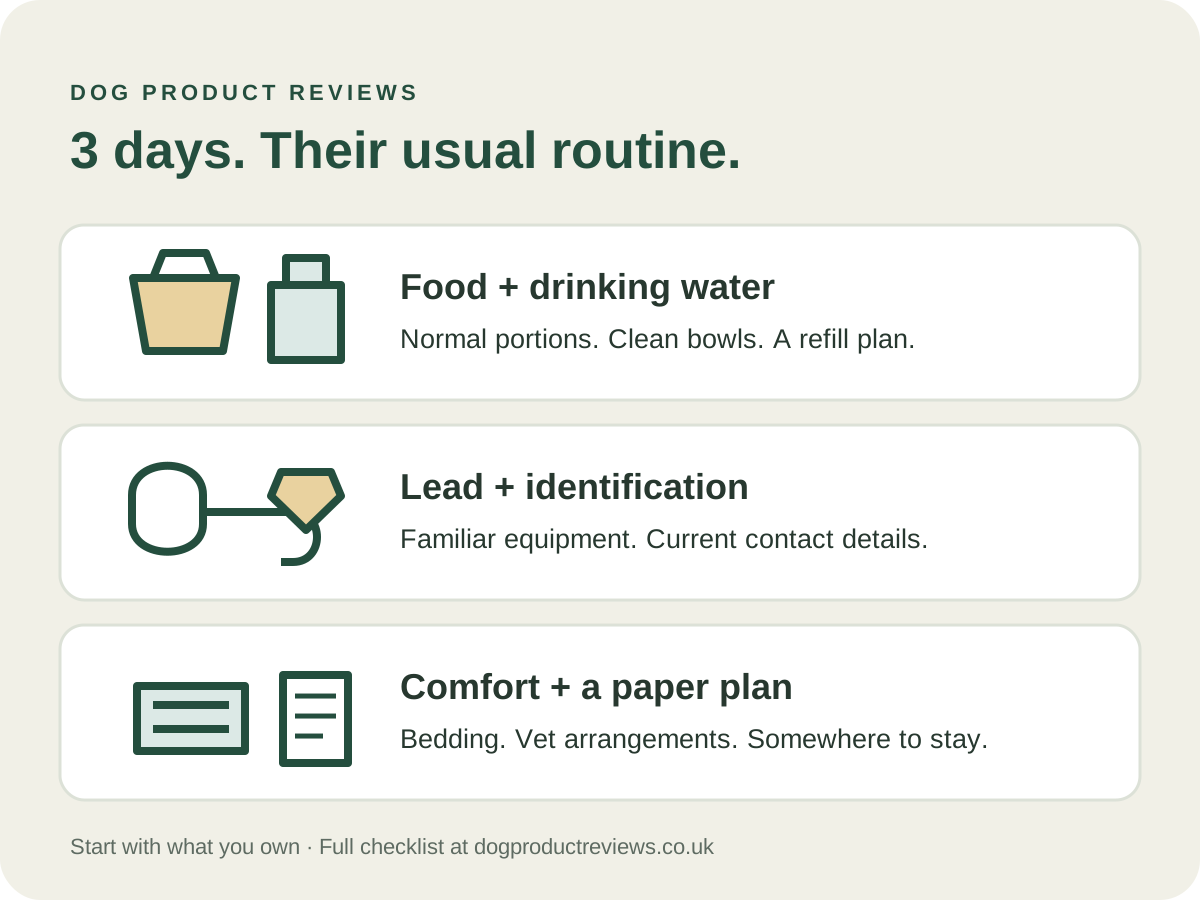
Dog Product Reviews · Dog emergency kit UK · Sources checked 23 October 2026
Keep the routine. Pack the essentials.
Your dog’s three-day checklist
3 days / your dogStart with the food, walking kit and bedding you already use. Tick each item when it is packed or its arrangement is confirmed, then print a copy to keep with the supplies.
Your ticks and food amount stay in this page’s memory. They are not saved or sent anywhere; reloading clears them.
0 of 10 items marked packed or arranged
This count records your notes; it does not certify that the kit meets every need.
Optional packing arithmetic
Set aside their normal food
Use one dog’s daily amount that is already established for their normal diet. This multiplies it by three; it does not choose a feeding amount. For mixed foods, calculate and pack each food separately.
Optional. Enter grams using a decimal point, for example 250.5.
Your three-day food amount will appear here.
Print, then complete by hand
Keep a paper contact card with the kit
Use a private paper copy for the details someone would need to help your dog.
- Dog’s name / current photograph location
- Blank line to complete on paper
- Owner and backup contact
- Blank line to complete on paper
- Usual vet / out-of-hours vet
- Blank line to complete on paper
- Agreed temporary dog-friendly place
- Blank line to complete on paper
- Written care and prescription instructions kept at
- Blank line to complete on paper
Full guidance and sources: dogproductreviews.co.uk/dog-emergency-kit-uk/ · Three days is a starting plan; PDSA recommends a week for floods. Follow your vet and live emergency instructions. Never delay evacuation to complete this list.
01 / Keep meals familiar
Food and water: plan for your actual dog
Pack three usual daily portions
Keep the food your dog normally eats, with its feeding and storage instructions. Label portions by dog if you have more than one. Include the scoop or tin opener you already use.
PDSA advises against sudden food changes. If your dog relies on chilled, raw or prescribed food, ask your vet for a workable plan if refrigeration or normal deliveries are interrupted. Follow the food’s storage instructions once opened.
Include their drinking water separately
Set aside clean drinking water for the dog as well as the people. Keep it accessible in suitable containers and plan how to obtain more if needed. The government’s water figure for people is not a dog allowance.
Keep clean water available. Ask your vet about individual needs, especially with an existing medical condition. UKHSA advises preventing pets from drinking floodwater; follow your water supplier’s incident advice about tap water.
02 / Arrange this with your vet
Regular medication needs an arrangement, not a guess
Ask your veterinary practice how to keep your dog’s existing prescription available during a short disruption. Agree the refill arrangements and what to do if you cannot reach the practice. Keep supplies in their labelled packaging alongside the current written instructions.
- Check what remains and when you should contact the practice for the next supply.
- Ask about storage and transport for any temperature-sensitive medicine, including what to do if power is lost.
- Keep a paper copy of the existing instructions and your usual and out-of-hours vet numbers.
- Ask the vet what to do if a supply is damaged, storage conditions are uncertain or a scheduled dose cannot be given.
The Veterinary Medicines Directorate identifies the packaging and leaflet as essential sources of product information. Keep those instructions available offline. This guide does not set doses, change treatment or recommend extra prescription quantities.
03 / Safe handling and getting home
Leads, identification, bowls and familiar bedding
Keep your usual lead and a well-fitting harness where you can reach them. Check fastenings and wear. If a car journey may be necessary, plan a suitable restraint in advance; our dog car harness guide explains the evidence and fitting checks.
For ordinary pet dogs in Great Britain, GOV.UK explains the collar-and-tag requirement for owner name and address in public, alongside up-to-date microchip records. A working phone number is a useful addition. Northern Ireland has its own identification and licensing rules, including exemptions. A chip or GPS tracker does not replace the applicable visible ID.
Two clean bowls, your usual waste bags, a familiar blanket and a towel can come straight from home. Store bedding dry and keep cleaning materials away from food and medicines. Add a recent photograph of your dog and protected copies of vaccination and microchip details, as RSPCA’s flood plan advises.
04 / Supplies and a number to call
What to put in a basic dog first-aid kit
Open the kit you already have and compare its contents with PDSA’s pet first-aid list. Useful supplies include:
- Wound dressings and bandages
- Wound wash suitable for the planned pet first aid
- Blunt-ended scissors
- Tweezers and a tick-removal tool
- Dressing tape
- Disposable gloves
- A foil blanket
- A blanket and written vet contact details
Check packaging and expiry dates. Ask a vet or vet nurse which supplies suit your dog and how to use them. First aid supports initial care; an injured or unwell dog needs prompt veterinary advice. A kit’s contents or a ticked box cannot establish that treatment is safe.
Read PDSA’s first-aid guidance and free guide05 / Think through both situations
Staying at home or leaving with your dog
If normal services stop
Keep the supplies in an accessible, dry place. Write down where anything stored elsewhere is kept. Include the dog in the household plan for water, power and communications, and follow local incident advice.
If you need to leave
Confirm somewhere that can accept your particular dog and how you will get there. Keep the lead, paperwork and essentials ready to gather. Follow emergency-service instructions promptly; never delay leaving to finish packing.
RSPCA recommends planning escape routes, helpers and transport equipment. Agree who can help if you are away from home. A spare bag or a box you can carry may be enough to organise the supplies.
Review the kit when the dog’s routine changes and at least at your household’s six-month check. Rotate food through normal use, check sealed water and first-aid dates, and update contact details. The government checklist recommends building supplies gradually and reviewing them regularly.
Use what you have first
Optional links for supplies you are missing
Check cupboards and the walking bag before buying. These are category searches to help fill a specific gap; they are not a tested shortlist or a required shopping bundle.
A portable bowl, if yours is awkward to carry
Try an existing lightweight bowl first. Check stability, usable size and cleaning instructions if choosing a folding one.
Ad · Search Amazon UKA top-up of your usual waste bags
Check the rolls already in your walking bag. Choose bags you can open and tie easily; no emergency-branded pack is needed.
Ad · Search Amazon UKA pouch for paper records
An existing sealable bag may do the job. Check its closure and protect the paper copy from spills.
Ad · Search Amazon UKFood storage, only if there is a gap
Keep the original food label and follow its storage instructions. Check the container against the actual portions you need to carry.
Ad · Search Amazon UKSearch results vary. Check the item, size, materials, seller and returns yourself. No live price, stock or product test is claimed here.
Practical questions
Before you pack
What should be in a dog emergency kit in the UK?
Start with the usual food, a separate supply of clean drinking water, prescribed medication arrangements, lead and harness, collar ID, two bowls, waste bags, familiar bedding, basic first-aid supplies and paper contacts. Use the ten-point checklist above to gather what you already have.
Is three days enough for every dog emergency?
Three days is the starting period used in the government Be Ready household guidance. PDSA’s flood-specific pet advice recommends a week of supplies. Your local risks, your dog’s needs and advice from your vet or emergency services may call for a longer plan.
How much dog food should I pack for 72 hours?
Set aside three normal daily allocations of the dog’s existing food. The optional helper multiplies an already established grams-per-day amount by three; it does not decide how much the dog should eat. Plan each dog and each food separately.
How much water does my dog need in an emergency kit?
Plan drinking water for your dog separately from the household’s human allowance. Needs vary with the dog, diet, health and conditions, so this checklist does not give a universal litre figure. Keep clean water available and ask your vet about individual requirements.
Do I need to buy a ready-made dog emergency bag?
No. Gather suitable items you already use and keep them accessible. A spare bag or lidded box can organise them. Buying missing supplies gradually is an option; a high item count or a specialist bag does not establish that a kit suits your dog.
Sources, checks and editorial limits
This original dog-specific guide was prompted by the BBC story Why should I stockpile and what will I need?. The practical advice above was checked directly against the primary sources below on .
- UK government: Be Ready for emergencies — three-day household planning, pet food and water, gradual preparation and reviews.
- PDSA: Flood safety for pets — pet supplies and a longer, week-long flood preparation period.
- PDSA: Your dog’s diet — normal feeding and avoiding abrupt changes.
- PDSA: First aid for pets — supplies and veterinary contact.
- RSPCA: Keeping animals safe during floods — escape, transport, dry supplies and protected records.
- UKHSA: How to recover from flooding — pets and floodwater.
- GOV.UK: Microchipping and visible dog ID; nidirect: Northern Ireland licensing and ID.
- Veterinary Medicines Directorate: Packaging, leaflets and supplementary information.
The checklist, packing helper and illustration are DPR editorial tools. We have not tested the linked products or established outcomes in an emergency. Individual veterinary advice and live instructions from the authorities take priority. Send a correction or read our evidence standards.
Back to your printable checklist