Affiliate disclosure: Some links below are affiliate links. If you buy through one, Dog Product Reviews earns a commission at no extra cost to you. As an Amazon Associate I earn from qualifying purchases. Full disclosure.
Evidence: research-led. Dog Product Reviews has not fitted these harnesses to a Whippet, measured strap position during movement, attempted a reverse-out, tested rubbing, pull loads, lifting, durability or cleaning. On 31 July 2026 we checked current maker construction and sizing information plus Dogs Trust fit and security guidance. Recent owner discussions were used only to identify questions, not to prove fit or rank performance. How we assess products.
A highly adjustable general-brand route with an exact-name Amazon search.
Evidence: research-led
Main drawback: Ruffwear does not publish it as a Whippet-specific design. Its girth chart cannot establish body length, shoulder clearance or strap position on an individual dog, and recent owner reports disagree about fit.
Skip if: Anyone expecting a breed label or weight range to guarantee fit.
There is no universal Whippet harness size. The Royal Kennel Club’s current Whippet standard describes a very deep chest, sprung ribs and a definite tuck-up, but also warns that individual dogs can be larger or smaller than breed-standard measurements. The dog’s measurements and exact harness layout are more useful than weight or breed labels.
This guide compares one highly adjustable general harness with a current Amazon route and one UK sighthound-specific direct route. Neither has been hands-on tested by Dog Product Reviews, and neither is presented as universally escape-proof.
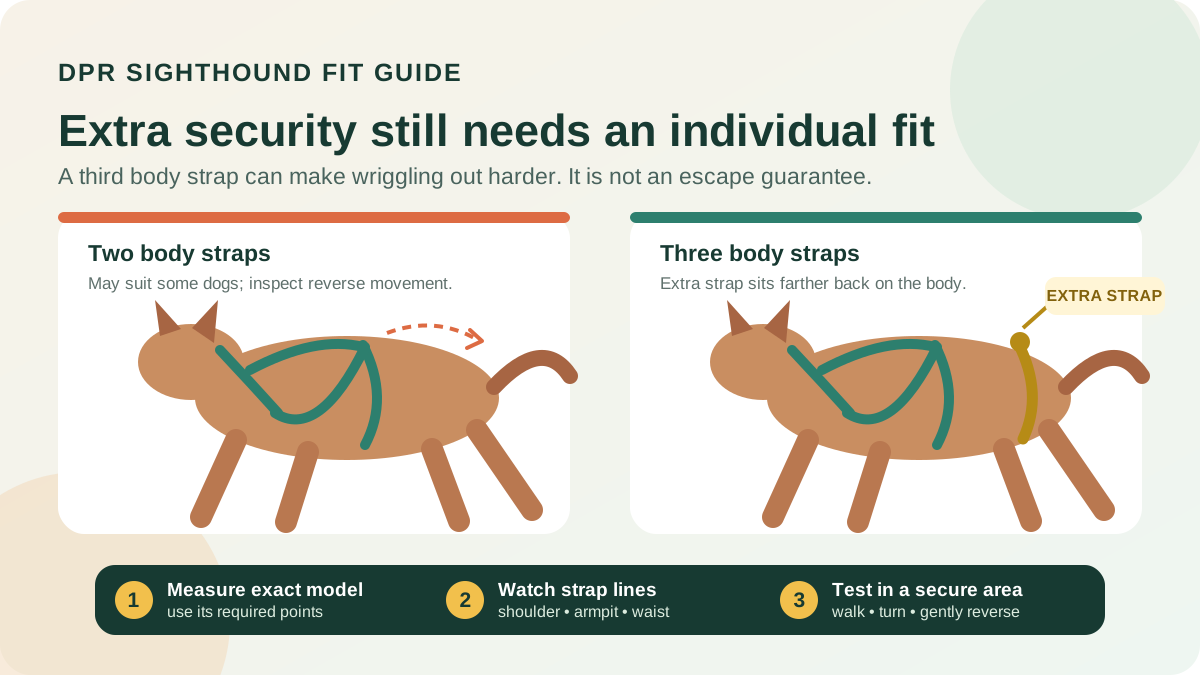
If a dog has previously slipped walking equipment, Dogs Trust says some dogs benefit from a three-strap harness and recommends a safety strap or double-ended lead between collar and harness for additional backup.
Quick answer:
Best-documented general route: Ruffwear Flagline. Ruffwear currently publishes six adjustment points, a chest/belly panel, a handle and three lead connections. Measure the widest part of the rib cage and check the whole fit on the individual dog.
Sighthound-specific route: The Trendy Whippet Triple Strap 2 Point Harness. Its maker publishes separate chest, waist, neck-opening, under-strap and back-strap measurements. The direct retailer link is non-affiliate.
Do not choose a breed size: Ruffwear and The Trendy Whippet use different measurement systems. Follow the exact chart behind the product being bought.
No security guarantee: a third body strap can make wriggling free harder, but fit, condition, behaviour and a backup connection still matter.
Whippet harness comparison: current construction and fit limits
These are current maker specifications, not Dog Product Reviews test results.
Current route
Published construction
Sizing route
Main limitation
Ruffwear Flagline
Six adjustment points, chest/belly panel, handle and three lead connections.
Measure the widest rib-cage point; five sizes cover 33–107 cm; maker says choose the larger size between ranges.
Not marketed as Whippet-specific; girth alone cannot prove body length or armpit clearance.
The Trendy Whippet Triple Strap 2 Point
Padded neoprene, front and back D-rings, adjustable chest and waist, and an additional waist strap.
Each size lists chest, waist, fixed neck opening, under-strap and back-strap measurements.
Specifications and security language come from the seller; some dogs may sit between dimensions.
Current Ruffwear Web Master
Three-strap style, four adjustment points, neck buckle, handle and three lead connections.
Measure widest rib-cage point; current maker chart says choose the smaller size between ranges.
Current construction differs from advice about older versions; recent Whippet-owner fit reports conflict.
What actually matters here
Use only the measurement points and between-size rule published for the exact current model.
Check that the harness does not cross or restrict the front of the shoulders.
Confirm the straps remain clear of the armpits and do not change position during ordinary movement.
Dogs Trust advises enough room for one finger comfortably between straps and body while preventing slipping.
For a dog with a history of backing out, consider a third body strap plus a separate collar-to-harness backup connection.
Inspect buckles, webbing, stitching and lead points regularly and stop using damaged equipment.
Confirm the seller’s indoor try-on and returns terms before removing tags or using the harness outside.
Who this is for
Whippet owners willing to measure the individual dog before choosing a size.
Owners comparing a general highly adjustable harness with a sighthound-specific layout.
Dogs whose current harness moves, gaps or sits too close to the shoulders or armpits.
Who should skip
Anyone expecting a breed label or weight range to guarantee fit.
Anyone seeking a universally escape-proof product; no harness removes every handling or equipment risk.
Dogs with pain, mobility limitations, skin injury or unusual handling needs without veterinary or qualified professional guidance.
Why Whippet harness fit needs more than breed weight
The Royal Kennel Club standard describes a very deep chest, deep brisket and definite tuck-up, with free, long movement. Those features explain why two body straps can sit very differently on two dogs with the same weight.
A breed standard is not a shopping chart. Measure the actual dog and check shoulder, armpit, chest and waist position once the harness is adjusted.
Ruffwear Flagline: what is documented
The current Flagline page publishes six adjustment points, a chest/belly panel, three lead connections and a handle. It tells buyers to measure around the widest part of the rib cage and choose the larger size when between ranges.
Those are useful specification facts, but Ruffwear does not promise Whippet-specific fit. Check body length and the location of both rear body sections rather than relying on the girth number alone.
The Trendy Whippet route: what is documented
The Trendy Whippet publishes separate chest, waist, neck-opening, under-strap and back-strap figures. That gives a buyer more dimensions to compare with a deep-chested, tucked-up dog.
The seller says its additional waist strap reduces the chance of slipping out. Treat that as a manufacturer claim, not a tested result. Measure before ordering and follow the retailer’s unused-return rules.
Fit-check before the first walk
Dogs Trust harness guidance says to avoid designs that cross directly in front of the shoulders, allow one finger comfortably beneath the straps, and ensure the harness neither changes position during movement nor permits the dog to slip out.
Try the harness indoors with tags attached. Watch the dog walk, turn, sit and lie down normally. Check for movement, gaping, rubbing, restricted stride or straps entering the armpit area. Do not deliberately frighten the dog or provoke an escape attempt.
Recheck after adjustment and regularly thereafter. Puppies, weight changes, coat layers and strap settling can all change the usable fit.
Current Web Master versus older recommendations
Ruffwear’s current Web Master page describes a three-strap design, four adjustment points, a neck buckle and three lead connections. Advice written for an earlier Web Master should not automatically be transferred to this current construction.
Recent 2026 Whippet discussions asked whether the current chest section can sit too wide or too near the armpits on narrow dogs. Other owners preferred the Flagline, while some reported the opposite or said neither fitted well. These contradictory anecdotes were used to add body-length, shoulder-clearance and returns checks, not to declare a winner.
Security without an escape-proof promise
Dogs Trust says a three-strap harness can make it harder for some dogs to wriggle free. For a dog that has slipped equipment before, it also suggests a double-ended lead or safety strap connected to both collar and harness.
That backup does not replace fitting, training or checking damaged equipment. Keep the dog on a lead or long line when recall is uncertain and use secure areas for off-lead exercise.
How this guide stays distinct
This canonical answers Whippet-specific shape, measurement and current-model questions. The broader escape-resistant harness guide compares security-oriented formats across breeds; this page does not reproduce that ranking.
Research sources were the current Ruffwear Flagline and Web Master pages, The Trendy Whippet product page, Dogs Trust harness and escape guidance, and the Royal Kennel Club Whippet standard. Reddit was used only to discover disputed fit questions. No numerical rating, review schema, fixed Whippet size or performance result is assigned.
Quick questions before you buy
What type of harness is best for a Whippet?
There is no universal model. Start with the individual dog’s measurements, shoulder clearance and history of slipping equipment. Dogs Trust says some dogs benefit from a three-strap harness, but fit and a backup connection still matter.
What size Ruffwear Flagline does a Whippet need?
Do not choose from breed or weight. Ruffwear says to measure around the widest part of the rib cage and compare that figure with its current chart; for Flagline specifically, it says to choose the larger size when between ranges. Confirm body length and strap position on the dog.
A highly adjustable general-brand route with an exact-name Amazon search
Ruffwear does not publish it as a Whippet-specific design. Its girth chart cannot establish body length, shoulder clearance or strap position on an individual dog, and recent owner reports disagree about fit.
A UK sighthound-specific route with more body measurements
The construction, comfort and security statements are seller claims rather than independent results. The neck opening is listed as a fixed measurement, so every relevant dimension still needs checking before use.
£
Recommended picks
Best-documented general route
Best for: A highly adjustable general-brand route with an exact-name Amazon search
Ruffwear Flagline Dog Harness with Handle
Why it made the list:Ruffwear’s current Flagline specification publishes six adjustment points, a load-dispersing chest/belly panel, a padded handle and three lead connections. Its chart uses girth around the widest part of the rib cage and says to select the larger size when between ranges. This is the best-documented general route to compare, not a Whippet-specific fit guarantee.
Main drawback: Ruffwear does not publish it as a Whippet-specific design. Its girth chart cannot establish body length, shoulder clearance or strap position on an individual dog, and recent owner reports disagree about fit.
Pros
Six adjustment points are stated by the current maker page.
Three lead connections and a handle are documented.
The affiliate destination searches the exact current product name rather than a different category.
Cons
Not made or sized specifically for Whippets.
No body-length measurement appears in the current chart.
Fit, rubbing, retention and durability are untested here.
The Trendy Whippet Black Triple Strap 2 Point Whippet Greyhound Harness — a UK sighthound-specific route with more body measurements
Best for: A UK sighthound-specific route with more body measurements
The Trendy Whippet Black Triple Strap 2 Point Whippet Greyhound Harness£
Why it made the list:The current product page lists padded neoprene, front and back D-rings, adjustable chest and waist straps and an additional waist strap. Its table publishes chest, waist, neck-opening, under-strap and back-strap dimensions for each size.
Main drawback: The construction, comfort and security statements are seller claims rather than independent results. The neck opening is listed as a fixed measurement, so every relevant dimension still needs checking before use.
Relative budget: £. Check the retailer for the current price.
Pros
Designed and dimensioned for several sighthound types.
More measurement points are published than on a girth-only chart.
Cons
No independent fit or durability evidence was found.
A dog can match one listed dimension but fall between sizes elsewhere.
There is no universal model. Start with the individual dog’s measurements, shoulder clearance and history of slipping equipment. Dogs Trust says some dogs benefit from a three-strap harness, but fit and a backup connection still matter.
What size Ruffwear Flagline does a Whippet need?
Do not choose from breed or weight. Ruffwear says to measure around the widest part of the rib cage and compare that figure with its current chart; for Flagline specifically, it says to choose the larger size when between ranges. Confirm body length and strap position on the dog.
Is the Ruffwear Flagline escape-proof for Whippets?
No universal escape-proof result is established here. Ruffwear publishes its construction and adjustment points, while Dogs Trust says a three-strap layout can make wriggling free harder. The individual fit, equipment condition, behaviour and any collar-to-harness backup remain important.
Is Flagline or Web Master better for a Whippet?
The current Flagline publishes six adjustment points; the current Web Master publishes four, a neck buckle and a three-strap style. Recent owner reports conflict about both models on narrow Whippet bodies, so measure and try the current version rather than relying on an old model recommendation.
How tight should a Whippet harness be?
Dogs Trust says one finger should fit comfortably between the strapping and body, while the harness should not move position or allow slipping. Also check shoulder movement, armpit clearance and the maker’s exact fitting instructions.
Does a Whippet still need a collar when wearing a harness?
Dogs Trust notes that dogs in UK public spaces still need a collar with an identity tag even when walked in a harness. A separate safety strap between collar and harness may provide backup for a dog with a history of slipping equipment.
Useful fit and backup items
Optional extras that may help with the task on this page. Check size, compatibility and care instructions before buying; these are category searches, not products tested by Dog Product Reviews.
Soft metric body tape
Useful for taking the exact chest, waist and neck measurements required by the selected maker chart.