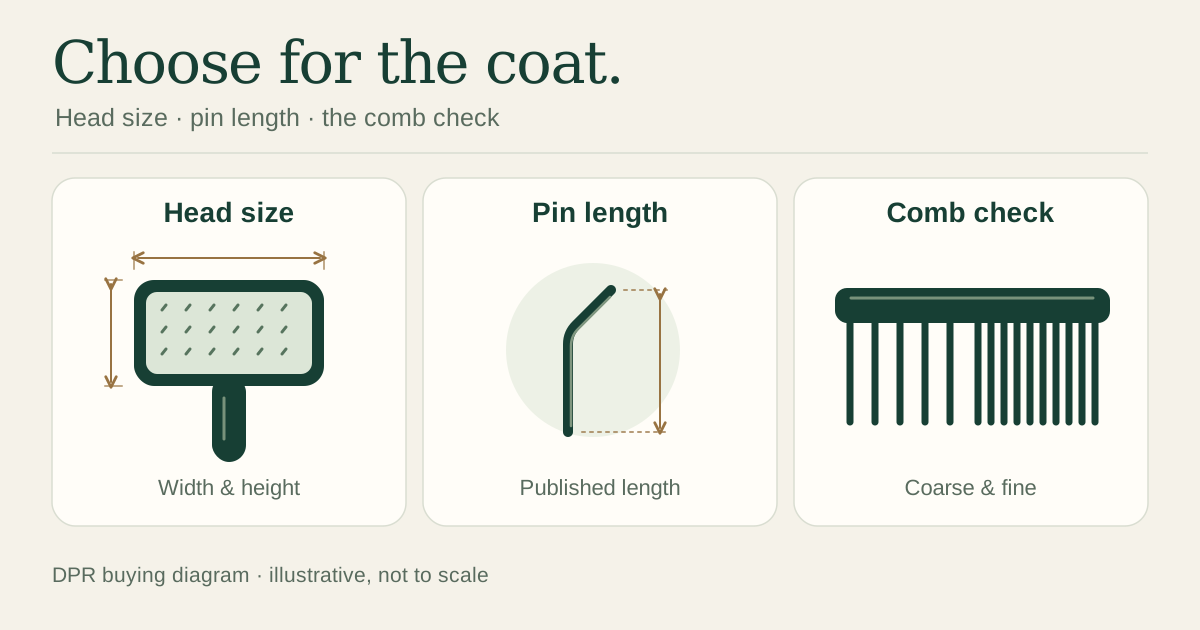
DPR buying diagram, not a photograph of a Cavapoo or a brush test. The head, pin and comb represent separate buying checks; illustrations are not to scale.
Affiliate disclosure: Some links below are affiliate links. If you buy through one, Dog Product Reviews earns a commission at no extra cost to you. As an Amazon Associate I earn from qualifying purchases. Full disclosure.
Evidence: research-led. This is a research-led Cavapoo coat-care guide, not a controlled brush test or a groomer-endorsed shortlist. On 7 September 2026 we rechecked the Baby G head and pin specifications, Mikki Doodles Comb details and PDSA grooming guidance for the decision panel below. The 18 October correction rechecks Ancol 433000 only; the other product records were not reverified for that correction. Manufacturer dimensions are not DPR measurements; comfort, brushing speed and durability remain untested here. How we assess products.
The maker lists 2⅜ × 2⅜in and 27mm pins, for a long coat and hard-to-reach areas. These are published specifications, not our measurements or proof of comfort.
A mat or a distressed dog changes the next step. Stop rather than buying a stronger tool. PDSA advises against tackling mats at home; ask a reputable groomer, or a vet about skin changes.
This filter stores and sends no dog details. It only matches your three selections to tags in the published register; it does not diagnose a coat, assess a mat or rank performance.
Premium compact slicker to compare for a longer coat.
Evidence: research-led
Main drawback: It is a premium-priced brush, and DPR has not compared full-body session time against a larger slicker. It is not a reason to brush through a tight existing mat; book a reputable groomer instead.
Skip if: The coat is short or closely clipped, the compact head cannot be controlled without pressing pins into the skin, or the coat is already tightly matted.
For a longer wavy or curly Cavapoo coat, one route to assess is a small flexible slicker plus a fine metal comb. For puppies, start gently with a suitable soft slicker or pin brush and build a positive handling routine. If the coat is already tightly matted, stop: PDSA advises owners not to tackle mats at home and to use a reputable groomer.
Cavapoo coats vary from straighter and silky to tightly curled. Longer, curlier coats can knot, especially when wet. PDSA suggests brushing poodle crosses a few times a week as a general starting point; use the individual coat, recent wetting and whether a comb passes without force to decide whether checks need to be more or less frequent.
This guide is not “ten brushes ranked”. A slicker and metal comb are often paired for a longer wavy or curly coat, with the comb used as a check rather than forced through resistance. Do not add a bladed dematter simply because a mat has formed; tight mats need professional assessment.
Tool scale matters. Chris Christensen positions the Baby G compact head for hard-to-reach areas, but choose pin firmness and size for the individual dog rather than assuming every Cavapoo has the same fine coat.
Quick answer:
Premium compact slicker: Chris Christensen Baby G — a 27mm long-pin slicker with a compact head for a long, curly coat and hard-to-reach areas. A fine metal comb is still needed as the check.
Pin-and-bristle route for light tangles and finishing: Ancol Ergo Double-Sided Pin & Bristle Brush — use its rounded-pin side in the direction of coat growth and its bristle side for surface smoothing, then use the metal-comb check without forcing through resistance.
Metal comb: a fine/coarse stainless-steel comb is a useful check for long, wavy or curly coats after brushing.
Already matted: do not force a slicker, comb or bladed dematter through a tight mat. Book a reputable groomer.
Detangling spray: use a dog-specific spray only on light tangles, following its label; it does not make a tight mat safe to brush out.
Exact tool, published specification and stop condition
These are source-recorded specifications and roles, not DPR performance results. Start with the individual coat and handling tolerance rather than buying by breed label alone.
Exact tool
Published specification
Documented coat or job role
Stop or limitation
Chris Christensen Baby G
27mm pins; approximately 6.0 × 6.0cm head (maker: 2⅜ × 2⅜in)
Maker’s long-coat family; hard-to-reach areas
Premium compact slicker, not a mat-removal tool; stop if it catches or causes discomfort
Ancol Ergo Double Sided Brush 433000
Maker lists 23 × 6.5cm for both sides; axes and pin length are not specified
Light tangles, loose hair and finishing; maker lists short, long, wire-haired and thick coats
Broad coat categories do not prove pin reach through a dense adult coat; stop if the dog becomes agitated
Mikki Doodles Comb 6376401
26 coarse and 37 fine tapered teeth; tooth length is not published
Poodle-cross lower-layer check after section brushing
A check is not permission to force through resistance; stop at a catch or mat
Existing mat, redness, pain or distress
No tool specification overrides the welfare stop
No product route
Stop and ask a reputable groomer; contact a vet for sore, broken or otherwise changed skin
What actually matters here
Properly finished pin tips and a flexible cushion — stop if a brush scratches the skin or causes flinching.
A head that permits controlled, low-pressure strokes. Whatever the construction, stop if pins scratch the skin, catch repeatedly or cause flinching.
Head size that can be controlled safely around the dog’s ears, legs and armpits.
Pin density and firmness matched to the individual coat rather than the crossbreed name.
Comfortable handle for short, calm sessions at the frequency the coat needs.
Why many Cavapoos need both a slicker and a comb
A slicker can work through sections of a wavy or curly coat. A metal comb then checks the result near the skin. This two-tool routine is useful for many Cavapoos, but a straighter or shorter individual coat may need a different setup.
A fluffy-looking surface does not prove that the coat is clear nearer the skin. A suitable comb provides a separate section-by-section check: if it catches, stop rather than pulling harder or assuming the slicker completed that area.
Cavapoo coats vary with genetics, clipping length, moisture and activity. Use the comb as feedback and brush often enough that it passes without force; do not impose a daily schedule on every dog regardless of coat.
Line brushing on a small dog
Line brushing is a section-by-section method for reaching beneath the surface of a longer coat. Method: lift a small section with one hand, use controlled strokes on the exposed layer without pressing the pins into the skin, then move gradually through the coat. A named method is not evidence that one tool or pressure suits every Cavapoo.
Work on a non-slip surface where the dog cannot fall. Keep sessions short, reward calm handling, use the slicker without pressing into the skin, then test each finished section with the comb. Stop if the dog becomes worried or if a tool catches rather than glides.
Inspect often-hidden or high-friction areas such as behind the ears, armpits, legs, tummy, tail and collar contact line with particular care. Let the individual coat—not a fixed breed checklist—determine the order and frequency, and stop rather than pulling through a tight mat.
How often to brush a Cavapoo
Frequency depends on coat length, texture, clip, activity and recent wetting. PDSA says poodle crosses may need brushing a few times a week as a general starting point. Inspect the individual coat after wet, muddy or high-friction activity and adjust the routine so a suitable comb does not need to be forced; ask a reputable groomer for individual advice if tangles recur.
During the puppy-to-adult coat change, reassess the individual coat rather than keeping a fixed tool or timetable. Keep handling gradual and positive. If the comb catches repeatedly or the dog flinches, stop and ask a groomer to assess the coat.
Buying checks by coat area and handling stage
Hard-to-reach areas: compare the published head dimensions, pin length and stop instructions; Chris Christensen positions the compact Baby G for these areas, but DPR has not tested control or comfort.
Long or curly adult coat: work in sections and use a suitable comb as a separate check. DPR has not timed large and compact heads or established a universal Cavapoo format.
Puppy handling: build brief, positive contact with a suitable soft brush. Do not move to a firmer tool by age alone; ask a reputable groomer to identify the changing coat and demonstrate technique.
Ear feathering needs separate attention. Support the hair near the skin and comb in small sections. Never pull on the ear leather or force through a knot.
What to do when you find a mat
Do not use coin size as a safety test. A small tight mat against thin skin can be more dangerous to cut than a larger loose tangle. Bladed dematting tools and scissors can pull or cut skin hidden inside the mat.
PDSA’s current grooming guidance says not to tackle mats at home. If a light tangle does not release with gentle finger separation and a dog-safe detangling spray used as labelled, stop and book a reputable groomer. Seek veterinary advice if skin is sore, wet, smelly or broken.
Crossbred coats vary. If your Cavapoo has a straighter coat and a shedding undercoat, ask a reputable groomer whether an undercoat tool is appropriate rather than choosing by breed name alone. Dog Product Reviews has not tested one on this coat.
Quick questions before you buy
What is the best brush for a Cavapoo?
A small flexible slicker plus a fine stainless-steel comb is one research-led combination to assess for a curly or wavy Cavapoo coat. Use controlled sections, stop if either tool catches or causes discomfort, and choose head size and pin firmness for the individual coat rather than the breed label alone.
How often should I brush my Cavapoo?
PDSA suggests brushing poodle crosses a few times a week as a general starting point. Adjust the interval for the individual coat, clip, recent wetting, friction and whether a suitable comb passes through without force; stop and use a reputable groomer for tight mats.
Premium compact slicker to compare for a longer coat
It is a premium-priced brush, and DPR has not compared full-body session time against a larger slicker. It is not a reason to brush through a tight existing mat; book a reputable groomer instead.
Pin-and-bristle route for light tangles and surface finishing
Ancol does not publish pin length, and its brush-size axes are unspecified, so reach through a dense adult curly coat remains unverified. DPR has not compared handle comfort or session length.
Recommended picks
Top pick
Best for: Premium compact slicker to compare for a longer coat
Chris Christensen Baby G Slicker Brush (Small)
Why it made the list:Chris Christensen’s current specification identifies the Baby G as the compact 2⅜ × 2⅜-inch head in its 27mm long-pin range for longer coats and hard-to-reach areas. That is a closer published role than the old linked Mark III Medium, whose 12mm pins sit in the shorter-coat category. We have not compared their comfort or detangling speed; pair the chosen slicker with a fine metal comb as a check.
Main drawback: It is a premium-priced brush, and DPR has not compared full-body session time against a larger slicker. It is not a reason to brush through a tight existing mat; book a reputable groomer instead.
Pros
Manufacturer positions the compact head for hard-to-reach areas.
27mm pins are from the manufacturer’s long-coat range.
Manufacturer specifies a flexible cushion pad; this has not been comfort-tested here.
Replace if pins bend, lose tips or the cushion splits.
Cons
Very high price for a brush.
DPR has not timed full-body sessions against a larger slicker.
A pure slicker — pair with a fine comb to test for hidden mats.
Not suitable for brushing through tight existing mats.
Ancol Ergo Double-Sided Pin & Bristle Brush — pin-and-bristle route for light tangles and surface finishing
Best for: Pin-and-bristle route for light tangles and surface finishing
Ancol Ergo Double-Sided Pin & Bristle Brush
Why it made the list:Ancol’s instructions, checked 18 October 2026, describe rounded pins used gently in the direction of coat growth, then bristles for surface smoothing. The maker now lists short, long, wire-haired and thick coats and 23 × 6.5cm for both sides, without specifying the axes. Its historical catalogue said 24cm; the register row retains that discrepancy. Do not push into the skin or continue if the dog becomes agitated; a broad coat category is not proof of reach through the individual coat.
Main drawback: Ancol does not publish pin length, and its brush-size axes are unspecified, so reach through a dense adult curly coat remains unverified. DPR has not compared handle comfort or session length.
Pros
Published pin side for detangling and bristle side for surface finishing.
Ancol directs the rounded-pin side through the coat in the direction of growth.
Ancol specifies the bristle side for smoothing the coat.
The exact model remains identifiable as product code 433000.
Cons
Pin length and brush-size axes are not published, so dense-coat reach is unverified.
Grip comfort has not been compared in a timed session.
Do not choose an upgrade by age alone; reassess the changing coat.
A small flexible slicker plus a fine stainless-steel comb is one research-led combination to assess for a curly or wavy Cavapoo coat. Use controlled sections, stop if either tool catches or causes discomfort, and choose head size and pin firmness for the individual coat rather than the breed label alone.
How often should I brush my Cavapoo?
PDSA suggests brushing poodle crosses a few times a week as a general starting point. Adjust the interval for the individual coat, clip, recent wetting, friction and whether a suitable comb passes through without force; stop and use a reputable groomer for tight mats.
Is a slicker brush safe for a Cavapoo puppy?
Start with a suitable soft brush and brief rewarded handling sessions. Do not move to a firmer slicker by age alone; ask a reputable groomer to identify the changing coat and demonstrate technique. Stop if the skin reddens, the brush catches or the puppy becomes worried.
Can I use a FURminator on a Cavapoo?
Do not use an undercoat blade by default on a curly or wavy Cavapoo. Crossbred coats vary; use a small slicker and comb for poodle-influenced coats, and ask a reputable groomer before using a deshedding blade on a straighter shedding coat.
My Cavapoo hates being brushed — what do I do?
Brush avoidance can reflect fear, sensitive skin, painful tangles or an unsuitable tool. Start on an easy area with a soft brush, reward brief calm contact and stop before distress. If the dog flinches, the coat is matted or the skin looks sore, ask a groomer or vet to assess it rather than pushing through.
Do I need a dematter or a dematting comb for a Cavapoo?
Do not use a bladed dematter as the default home fix. PDSA advises owners not to tackle mats at home because skin can be pulled into the mat and cut. If gentle finger separation and correctly used detangling spray do not release a light tangle, book a reputable groomer.
How is brushing a Cavapoo different from brushing a Cockapoo?
The section-brushing and comb-check approach can be assessed for either cross, but tool size and frequency depend on the individual coat rather than the crossbreed name. Compare exact head dimensions and published area roles instead of assuming a compact or larger format will perform better.
Complete the Cavapoo brush-and-comb routine
For a longer wavy or curly coat, the comb provides the separate check described above; the spray, mat and alternative slicker are optional. These retailer searches are not DPR-tested recommendations. Check the exact model, suitability and current price before buying.
Mikki Doodles Comb 6376401
The documented comb in the comparison: 26 coarse and 37 fine teeth for a separate coat check after brushing. Confirm the product code in the retailer results and stop if it catches.